

You’ll find Joe McCarthy’s odyssey from Long Island aviation enthusiast to legendary Dambuster pilot truly extraordinary. After three rejections from the U.S. Army Air Corps, he joined the Royal Canadian Air Force in 1941, quickly proving himself as an exceptional bomber pilot. During Operation Chastise, he successfully breached the Sorpe Dam after 10 daring bombing runs.
His distinguished service earned him both the Distinguished Flying Cross and Distinguished Service Order, marking just the beginning of his incredible aviation legacy.
Key Takeaways
- American-born Joe McCarthy joined the RCAF in 1941 after three failed attempts to enter the U.S. Army Air Corps.
- As a skilled bomber pilot with No. 97 Squadron RAF, McCarthy earned both the Distinguished Flying Cross and Distinguished Service Order.
- McCarthy played a crucial role in the Dambusters Raid, successfully breaching the Sorpe Dam after ten precise bombing runs.
- He demonstrated exceptional versatility by piloting various aircraft, including captured Luftwaffe planes and the British Meteor jet.
- One of 9,000 Americans who volunteered for the RCAF, McCarthy became one of the service’s most distinguished airmen.
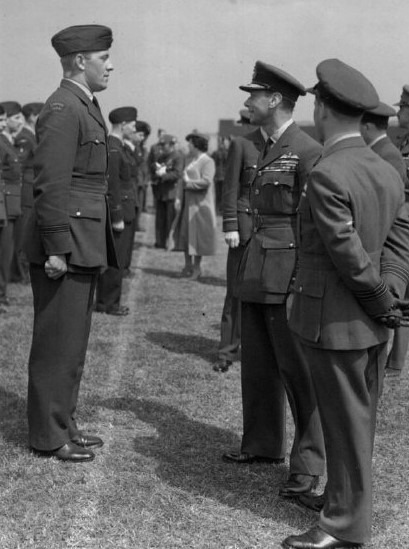
Early Dreams of Flight: From Long Island to New York City
Growing up on Long Island in 1919, Joe McCarthy’s childhood passion for aviation shaped his future as one of WWII’s most legendary pilots. As a young man in New York City, he’d spend countless hours watching aircraft and dreaming of taking to the skies himself.
When the beginning of the war approached, Joe’s determination to become a military pilot led him to attempt joining the Army Air Corps not once, but three times. Despite facing rejection, his resolve never wavered.
In 1941, McCarthy found his path to the cockpit by enlisting in the Royal Canadian Air Force alongside a friend. This decision would prove crucial, launching him toward an extraordinary wartime career that would eventually lead him to the legendary Dambusters squadron. Like many Americans before Pearl Harbor’s attack, McCarthy sought opportunities to fly with allied forces while his own nation remained isolated from the global conflict.

Joining the RCAF: An American’s Path to War
Persistence defined Joe McCarthy’s trek to become a wartime pilot. You’ll find his determination evident in his three unsuccessful attempts to join the U.S. Army Air Corps, but these setbacks didn’t deter him. Instead, they fueled his resolve to find another path to the skies.
In 1941, McCarthy and a friend made a crucial decision that would shape his military career – they joined the Royal Canadian Air Force. As one of the RCAF’s American recruits, McCarthy quickly proved his worth through rigorous training. His exceptional skills earned him a position with No. 97 Squadron RAF, where he distinguished himself in combat operations. This achievement didn’t go unnoticed, earning him the Distinguished Flying Cross and setting the stage for his historic role as the only American pilot in the legendary Dambusters raid. Like fellow American James H. Howard who joined foreign service with the Flying Tigers, McCarthy found his path to aerial combat through an allied force.

Training and Combat Experience in No. 97 Squadron RAF
McCarthy’s career with No. 97 Squadron RAF marked the beginning of his exceptional combat experience. After completing his Royal Flying Training and earning his commission in December 1941, he quickly proved himself as a skilled bomber pilot during operations against enemy targets.
His outstanding performance in combat missions caught the attention of his superiors, leading to the award of the Distinguished Flying Cross. This recognition of his abilities would later prove vital when Wing Commander Gibson noticed his talents and recruited him for a specialized mission. McCarthy’s time with No. 97 Squadron laid the foundation for his future role in one of the most daring raids of World War II, setting him on a path that would lead to the legendary No. 617 Squadron and the famous Dams Raid. The squadron’s missions often relied on the Norden bombsight technology to achieve unprecedented accuracy during strategic bombing operations.
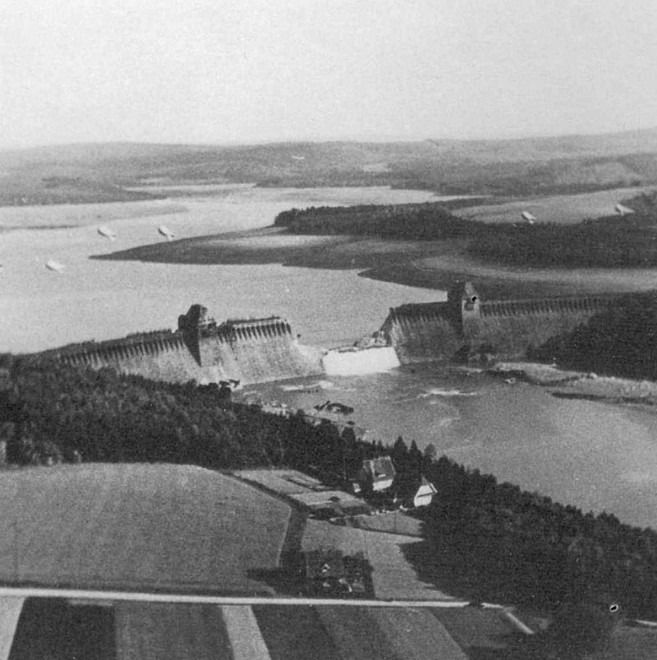
The Historic Dambusters Mission: Targeting the Sorpe Dam
The legendary Dambusters raid of 1943 saw Joe McCarthy take on one of the mission’s most challenging targets – the Sorpe Dam. Despite launching 20 minutes behind schedule due to aircraft technical issues, McCarthy DSO DFC demonstrated exceptional determination in pressing forward with the mission.
His precision paid off when he successfully breached the dam, releasing nearly half a billion tons of water downstream. The destruction spread over 100 miles, considerably impacting German industrial capabilities.
His extraordinary courage and skill during this critical operation earned him the Distinguished Service Order. The successful breach of both the Sorpe and Möhne Dams marked a turning point in the strategic bombing campaign against Nazi Germany.
You’d be impressed by his persistence as he made 10 separate bombing runs to guarantee precise delivery of his “bouncing bomb.”
The mission’s success came at a heavy cost, with 53 RAF airmen losing their lives during Operation Chastise.
Distinguished Service Record and Military Honors
Building upon his extraordinary achievements in the Dambusters raid, Joe McCarthy amassed an impressive collection of military decorations throughout his distinguished career with the Royal Canadian Air Force.
He earned the Distinguished Flying Cross (DFC) for his exceptional operational flying against enemy forces, and his leadership during the Dambusters Raid led to the prestigious Distinguished Service Order. After being promoted to Squadron Leader and flight commander, he received a Bar to his DFC, further cementing his reputation for courage under fire.
You’ll find his combat record includes significant contributions to Allied victory, from dropping the first 12,000-pound Tallboy bomb to targeting essential German installations like submarine pens and V-1 facilities. His service concluded with his 67th operation on July 4, 1944.
Leadership Role in No. 617 Squadron Operations
After assuming the role of Squadron Leader, Joe McCarthy showcased his exceptional leadership abilities through precision bombing operations that would help shape the course of the war. Following the famous Dams Raid, McCarthy remained at the forefront of No. 617 Squadron’s most challenging missions.
His exemplary command style and precision flying skills made him a priceless asset to the squadron’s success, earning him recognition through various artistic tributes, including the renowned “American Dambuster” painting by Mark Postlethwaite.
You’ll find his leadership demonstrated through these notable achievements:
- Leading specialized attacks on strategic targets across France
- Commanding the first mission to deploy the massive 12,000-pound Tallboy bomb
- Directing essential pre-D-Day operations that weakened enemy defenses
- Completing 67 successful operations before his final flight on July 4, 1944
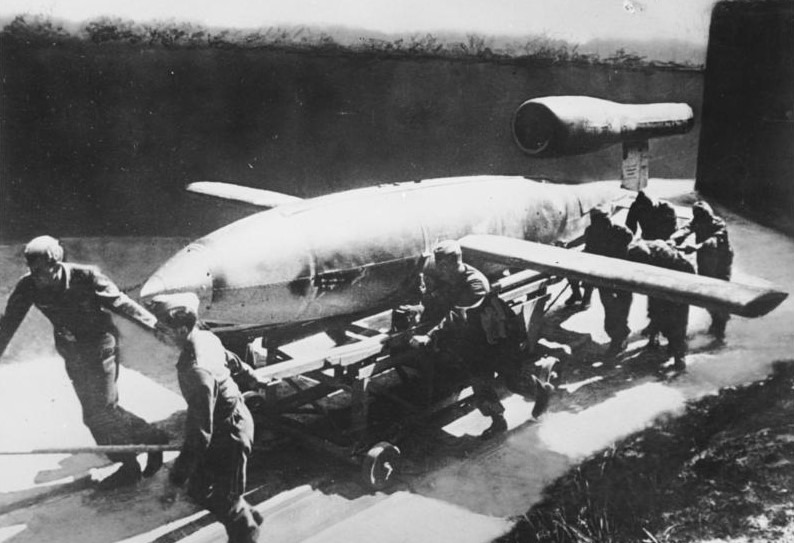
Flying Against V-1 Sites and Submarine Bases
Leading specialized attacks against Hitler’s secret weapons program, Joe McCarthy orchestrated critical missions targeting V-1 flying bomb sites and submarine bases along the French coast. His proficiency in Base Operations made him a valuable asset as 617 Squadron worked to disrupt German defenses before D-Day.
The Allied Corps knew McCarthy’s precision bombing skills would be essential for neutralizing the threat of V-1 “Vengeance Weapons.” He demonstrated his prowess during raids on the Watten factory in France, where these deadly weapons were manufactured. McCarthy’s most notable achievement came when he participated in dropping the first 12,000-pound Tallboy bomb on a German submarine pen. His low-level attack techniques and unwavering determination helped weaken Hitler’s defensive infrastructure, clearing the way for the successful Allied invasion of Normandy.
Test Pilot Years: Mastering Luftwaffe Aircraft
The skilled pilot’s postwar career took a fascinating turn when Joe McCarthy joined the Foreign Aircraft Flight at the Royal Aircraft Establishment. After World War II, he’d become an expert at flying captured German aircraft, building on his already impressive combat experience.
Any citation reading about McCarthy’s test pilot years will reveal these notable achievements:
- Mastered numerous exotic Luftwaffe aircraft designs
- Piloted the state-of-the-art British Meteor EE-360 jet
- Led the Test and Development Establishment
- Commanded a Maritime Reconnaissance Squadron
His extensive experience with both Allied and enemy aircraft made him uniquely qualified for his role at the Royal Aircraft Establishment. McCarthy’s RCAF career continued to soar as he took on the position of Wing Commander Flying, demonstrating his exceptional versatility in the cockpit across multiple aircraft types.
Post-War Legacy in Canadian Aviation
Joe McCarthy’s enduring impact on Canadian aviation extended far beyond his wartime heroics. After trading farmers’ fields near Woodhall Spa for Canadian shores, he embraced his new citizenship and continued to shape military aviation through diverse roles.
You’ll find his influence throughout the RCAF, from his command of Maritime Reconnaissance Squadron to his pioneering work at the Test and Development Establishment.
His versatility as a pilot shone through as he commanded various aircraft, including captured Luftwaffe planes and the British Meteor jet. McCarthy’s legacy lives on not just in military records, but in artistic tributes like Mark Postlethwaite’s “American Dambuster” painting.
As the only American pilot in the famous Dambusters raid, he’s remembered as one of the RCAF’s most distinguished airmen, leaving an everlasting mark on Canadian aviation history.

The Impact of American Volunteers in the RCAF
Before America’s official entry into World War II, roughly 9,000 young Americans demonstrated extraordinary courage by volunteering for the Royal Canadian Air Force, with Joe McCarthy among their ranks.
These brave volunteers, like “Big Joe” McCarthy who’d later fly perilous missions over the Ruhr valley, faced staggering losses. Over 800 Americans died while serving in RCAF bomber squadrons, making pivotal sacrifices that have often been overlooked by historians.
Their impact on the Allied bombing campaign was profound, as they:
- Strengthened RCAF’s operational capability during critical early war years
- Brought valuable skills and determination to dangerous night missions
- Helped maintain bombing pressure on German industrial targets
- Paved the way for stronger Canadian-American military cooperation
Their legacy lives on as a symbol of the unwavering spirit of international cooperation in the face of tyranny.