

The Museum of the Second World War in Gdańsk presents Poland’s wartime experience within a global context. Located near the historic Westerplatte, where WWII began, the museum offers a comprehensive look at the conflict’s causes, impact, and aftermath. Its main exhibition spans nearly 5,000 square meters underground, featuring over 2,000 artifacts, multimedia displays, and immersive reconstructions.
Visitors can explore themes such as “The Road to War,” “The Terror of War,” and “The Long Shadow of War,” gaining insight into both military events and civilian life during the war. The museum’s modern design and thoughtful exhibits make it a significant destination for understanding WWII history.
Image: Adrian Grycuk, Museum of the Second World War in Gdańsk 2025b, CC BY 3.0 PL
History and Development of the Museum
The birth of the Museum of the Second World War in Gdańsk began on September 1, 2008, when it was established by the Minister of Culture and National Heritage. Initially named the Westerplatte Museum, it was renamed to its current title just two months later on November 26, 2008. Paweł Machcewicz was appointed as the museum’s representative, bringing together an impressive academic advisory board that included renowned historians like Norman Davies and Timothy Snyder.
The museum chronicles World War II events including the crucial role of the United States AAF which had expanded from just 26,500 personnel in 1939 to over 2.4 million by 1944.
The architectural vision for this significant World War II memorial came from the Gdynia-based Kwadrat studio, which won the design competition. You’ll find the impressive building facing the Motława River on Wałowa Street, encompassing approximately 23,000 square metres. This space was designed to house exhibitions that would present the Polish narrative of the war within a broader historical context.
The Striking Architecture and Design
Standing as a powerful witness to the dark history it preserves, Daniel Libeskind’s architectural masterpiece immediately captures your attention with its distinctive leaning tower that stretches over 40 meters into the Gdańsk skyline. The museum building’s design conceptualizes the Second World War’s timeline through three interconnected spheres representing past, present, and future across its 2.5-acre complex.
The design of the exhibition space takes you 14 meters underground where “Narrative: the Permanent Exhibition” unfolds across 18 thematic sections:
- 5,000 square meters showcasing nearly 2,000 original exhibits
- 240 interactive multimedia stations providing digital access to additional content
- Immersive audio-visual elements that enhance the storytelling approach
The museum grounds cover approximately 23,000 square meters, creating an environment that reflects the gravity of WWII’s legacy. The museum’s comprehensive multimedia approach echoes the technological revolution sparked by wartime innovations like the Colossus computer, which remained classified until decades after helping secure Allied victory.
Controversy and Political Influence
Despite its architectural brilliance and all-encompassing exhibits, the Museum of the Second World War has been entangled in Poland’s complex political landscape since its inception. When the Law and Justice party criticized the original concept as “too pacifistic and not Polish enough,” they replaced director Paweł Machcewicz and altered exhibits to emphasize Polish martyrdom.
The museum’s WWII narrative now downplays Polish complicity in the Holocaust while highlighting “spectacular failures” in Polish history. You’ll notice this political interference shapes your visitor experience—tour guides must follow an authorized narrative that paradoxically condemns nationalism while serving a government often accused of Polish nationalism itself.
Two-thirds of original guides refused these constraints, resulting in new hires. This exhibition controversy has led to mixed reviews, with critics noting the museum lacks the nuance and honesty found in other historical museums. This approach stands in stark contrast to Churchill’s wartime leadership, which embraced powerful speeches that inspired resilience while maintaining historical accuracy about Britain’s role in the conflict.
The Permanent Exhibition: Artifacts and Narrative
Descending 14 meters underground, you’ll discover the museum’s crown jewel—a sprawling 5,000-square-meter permanent exhibition that unfolds World War II’s complex narrative through three distinct blocks. “The Road to War,” “The Terror of War,” and “The Long Shadow of War” guide visitors chronologically through the conflict’s origins, brutal realities, and lasting consequences.
The Muzeum II Wojny Światowej presents history through:
- Nearly 2,000 original artifacts that provide tangible connections to the war’s human experience
- 240 multimedia stands enhancing the historical narrative with interactive elements
- A special “Time Travel” children’s exhibition reconstructing apartments from different historical periods
Beyond the permanent exhibition, you’ll find temporary exhibitions, educational workshops, and a cinema—all reinforcing the museum’s mission to preserve World War II’s complex history.
Visitor Experience and Practical Information
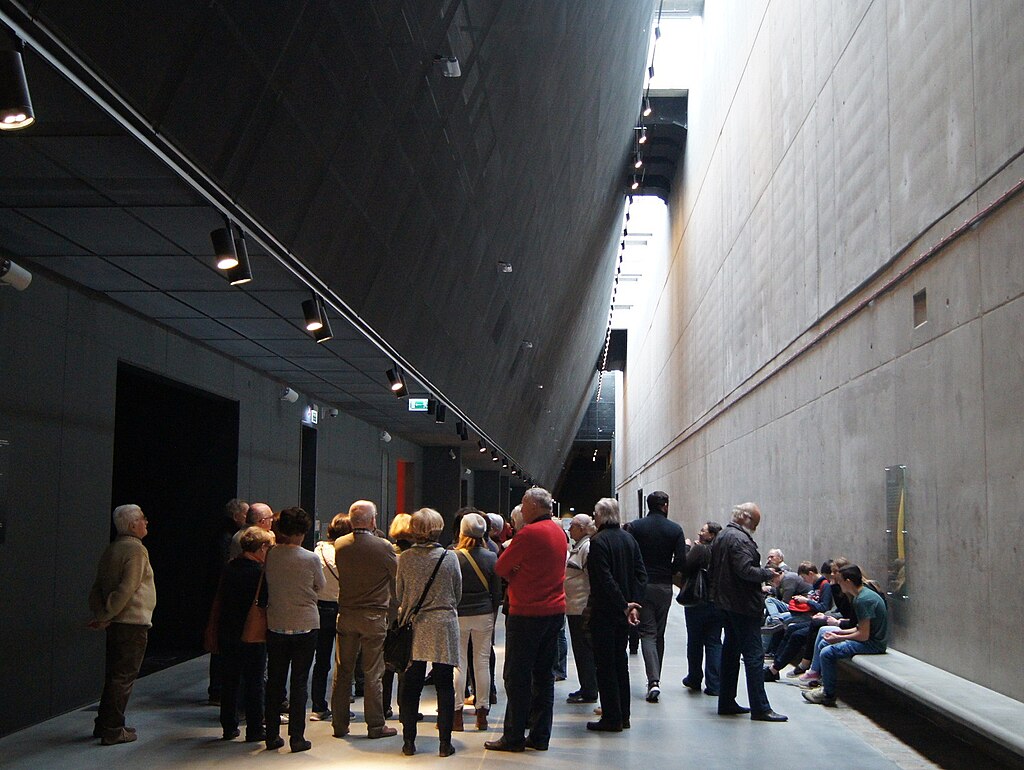
Image: Rudolf H. Boettcher (1rhb), Muzeum-2-wojny-swiatowej-1rhb, CC BY-SA 4.0
The Muzeum II Wojny Światowej’s powerful narratives come to life through careful planning of your visit. Located in Gdańsk at pl. W. Bartoszewskiego 1, this extensive WWII museum demands at least three hours to properly experience its Polish perspective on history.
You’ll navigate 5,000 square meters of exhibition space housing over 2,000 artifacts across 18 thematic sections. Adult tickets cost 11.00 €, while students enjoy a reduced rate of 9.00 €. For deeper insights into the exhibits, rent an audio guide for 3.50 €.
The museum’s thorough narrative covers civilian experiences, concentration camps, and military operations of World War II. For additional visitor information, you can contact the museum directly at +48 58 760 09 60 or email info@muzeum1939.pl to enhance your understanding of this pivotal historical period.
Must-See Museum Highlights
When exploring the Museum of the Second World War, you’ll encounter several profound exhibits that define your visit. The freight wagon display stands as a powerful symbol of deportation during World War II, instantly connecting you to Poland’s wartime trauma.
The museum’s narrative unfolds through three compelling sections that trace the conflict from its origins to its lasting impact.
- Personal belongings and documents that reveal individual stories behind Gdańsk’s and Poland’s wartime experience
- Diverse exhibition elements linking military hardware with everyday objects to illustrate both combat and civilian suffering
- Immersive multimedia presentations featuring historical footage and music that bring the war’s reality to life
This thoughtful curation transforms abstract history into a tangible experience, making the museum a must-visit destination for understanding Poland’s complex WWII narrative.
Upcoming Events and Special Exhibitions
Throughout the summer months, you’ll find a rich calendar of events at the Museum of the Second World War that extends your understanding beyond the permanent collection.
Don’t miss the curator-led tour on “Children during World War II” on June 28th at noon, offering poignant insights into young lives disrupted by conflict. The museum’s newest project, “Ordinary – Extraordinary,” celebrates the lesser-known heroes whose everyday courage shaped Poland’s history.
Animal lovers will appreciate the temporary exhibition “FAUNA. Animals at War and Their People,” while culture enthusiasts should experience the “Festival of Rescued Culture” events throughout the month. History buffs can take advantage of the promotional price on “Memory in the Ground. The Archaeology of Westerplatte,” an essential publication for understanding Gdańsk’s pivotal role during the war.