

Before he was President of the United States, John F. Kennedy was a young naval officer fighting in the Pacific during World War II. While many know him for his inspiring speeches and leadership during the Cold War, fewer realize he was once at the center of a dramatic survival story that tested his courage and leadership like never before.
Let’s break down what happened with PT-109, why it mattered, and how it helped shape JFK’s image for years to come.
Key Takeaways
- PT-109 collided with a Japanese destroyer on August 1, 1943, leading to a critical survival situation.
- Lieutenant John F. Kennedy demonstrated leadership by towing injured crew to safety amid strong currents.
- Kennedy carved a rescue message on a coconut shell, showcasing resourcefulness and quick thinking.
- The crew was rescued on August 8, 1943, after Kennedy’s strategic coordination with native islanders.
- Kennedy received the Navy and Marine Corps Medal for his heroism during the PT-109 incident.
What Was PT-109?

PT-109 was a small patrol torpedo boat—just 80 feet long and made mostly of wood. These boats were designed for speed and surprise attacks, not heavy combat. Kennedy, then a 26-year-old lieutenant, took command of PT-109 in the Solomon Islands in 1943, during a time when the U.S. was engaged in fierce fighting against Japanese forces.
The Fateful Night in Blackett Strait
On the night of August 1-2, 1943, Kennedy and his crew were on a routine patrol near the island of New Georgia. Their mission was to intercept Japanese ships trying to deliver supplies. It was a dark night—so dark that visibility was nearly zero. Suddenly, without warning, a Japanese destroyer called the Amagiri appeared out of the blackness.
Before PT-109 could move, the destroyer sliced through it, cutting the small boat in half. Two crew members were killed instantly. The rest, including Kennedy, were thrown into the water.
The collision at sea was reminiscent of the strategic bombing missions carried out by air divisions during World War 2, highlighting the unpredictability and danger faced by military personnel in combat situations.
Stranded in Enemy Waters
With their boat destroyed and miles from safety, Kennedy had a choice: panic or lead.
He chose to lead.
He helped gather the surviving crew, towing one badly burned sailor by holding a lifejacket strap in his teeth while swimming more than 3 miles to a small island. The men had no food, no fresh water, and no way to contact help.
For the next several days, they moved from one tiny island to another, looking for safety. Kennedy swam long distances again and again, searching for help.
Ingenious Communication for Rescue
On August 4, Kennedy led his crew to Olasana Island. Faced with the challenge of rescuing his stranded crew, John F. Kennedy showcased remarkable ingenuity. He used a coconut husk to craft a message that became an essential tool in their survival.
By scratching “NAURO ISL COMMANDER… NATIVE KNOWS POSITION… HE CAN PILOT… 11 ALIVE NEED SMALL BOAT… KENNEDY,” he communicated their dire situation and precise position. This act of leadership demonstrated Kennedy’s resourcefulness under extreme conditions and highlighted his commitment to his crew’s safety.
The coconut’s message underscored an ingenious approach to communication, crucial for the rescue. Encased in plastic and mounted on wood, the coconut became a lifelong keepsake for Kennedy, symbolizing the moment when quick thinking and decisive action guaranteed their survival.
The Courageous Rescue Mission
Despite the odds stacked against them, John F. Kennedy demonstrated unwavering courage and leadership during the PT-109 rescue mission. After their vessel sank, Kennedy and his crew endured days of survival challenges on Olasana Island. Starvation and enemy patrols loomed, yet Kennedy’s resolve never wavered.
Ingeniously using a coconut shell, he carved a plea for help, which native islanders delivered to US forces. On August 8, 1943, Kennedy’s perseverance paid off. As rescue boats PT-157 and PT-171 approached, his quick thinking became evident. He located the sleeping survivors, rallying them for their timely escape.
Kennedy’s bravery and strategic coordination during this daring rescue earned him the Navy and Marine Corps Medal, cementing his legacy of heroism. The formation of international organizations, like the United Nations, after World War II, sought to prevent such conflicts and promote peace globally.
Recognizing Heroism and Legacy
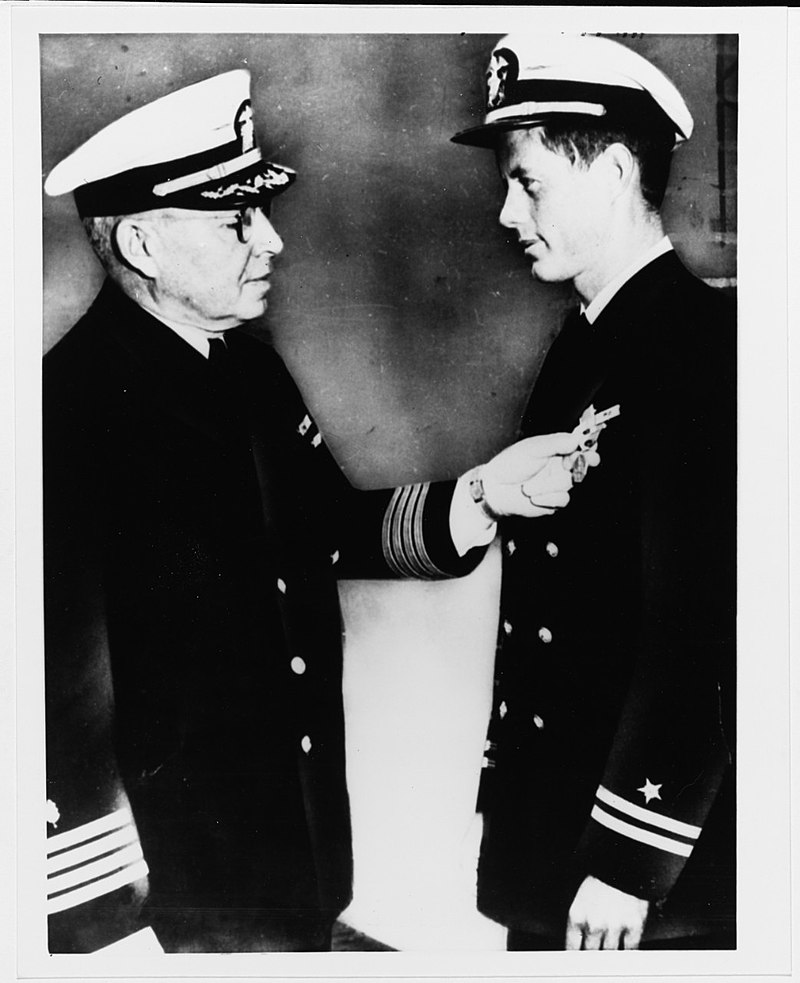
Kennedy’s heroism during the PT-109 incident didn’t just earn him a medal; it cemented his status as a true leader in the eyes of many. By receiving the Navy and Marine Corps Medal, Kennedy’s leadership and resourcefulness were recognized as he rescued his crew after the boat was struck by a Japanese destroyer.
His quick thinking, as he swam to safety while towing an injured crew member, demonstrated his unyielding courage. The rescue mission, marked by a message on a coconut, highlighted his determination. The PT-109 story became a pillar of his public persona and political legacy.
Kennedy emerged as a war hero, deeply affected by his experiences, which shaped his views on war and his appeal to voters. The Eagle Squadrons, composed of American volunteer pilots in the RAF, similarly demonstrated transatlantic cooperation and heroism during World War II.
Why This Story Matters
The PT-109 incident wasn’t just a war story—it showed the kind of person JFK was under pressure. He didn’t just survive; he stepped up, stayed calm, and put others first.
Many believe this experience shaped how he approached leadership later on. His wartime bravery earned him the Navy and Marine Corps Medal and helped boost his political career. When he ran for Congress and eventually the presidency, this story played a big part in his public image.
A Lasting Legacy
Hollywood even picked up on the drama—“PT 109,” a film based on the incident, was released in 1963 while Kennedy was still in office. But beyond the movie and the medals, the real legacy of the PT-109 story is what it reveals about character.
Kennedy wasn’t just a politician with a famous family name. He was someone who had been tested—and proven himself—in one of the toughest situations imaginable.
Final Thoughts
John F. Kennedy’s PT-109 story is more than just a tale of wartime survival. It’s a reminder of how real leadership often shows up in unexpected moments. It’s also a chapter in history worth remembering—not just because it shaped a future president, but because it shows the kind of bravery and grit that inspires people to this day.