

In 1944, the Battle of Imphal was essential in the Burma Campaign. Positioned 70 miles from the Burmese border, Imphal was a critical base. The Allied forces’ strategic resilience countered the Japanese invasion, led by Lt. Gen. Renya Mutaguchi aiming to disrupt supply lines. Their successful defense halted the Axis advance into India and shifted momentum. This triumph laid the groundwork for future successes in Burma. There’s much more to uncover about this significant battle.
Strategic Importance of Imphal in the Burma Campaign
Although often overshadowed by other battles, Imphal’s strategic importance in the Burma Campaign can’t be overstated.
Positioned just 70 miles from the Burmese border, Imphal served as a critical forward base for Allied troops. Its airfields and supply dumps were crucial for maintaining operations against Japanese forces.
Securing Imphal meant controlling essential supply routes from Dimapur and Tiddim, linking Indian forces and ensuring a steady flow of resources. Japanese forces aimed to capture Imphal to cut off these connections, hoping to isolate and destroy the Allies.
However, the successful defense by Allied troops not only thwarted the Japanese advance but also marked a decisive turning point in the Burma Campaign, halting the Japanese invasion of India and shifting momentum in favor of the Allies.
Japanese Command and Invasion Strategy
In March 1943, the Japanese command in Burma underwent a significant reorganization that set the stage for their ambitious invasion strategy.
Lt. Gen. Masakazu Kawabe led the Burma Area Army, while Lt. Gen. Renya Mutaguchi spearheaded the Fifteenth Army, aiming to capture Imphal through Operation U-Go. Their goal was clear:
- Disrupt Allied forces’ supply lines during the invasion of India.
- Incite rebellion against British colonial rule.
- Encircle and destroy the 17th Indian Division.
Despite these plans, the Japanese underestimated logistics challenges and the resilience of Allied forces.
The Japanese 33rd Division attempted to encircle Imphal from the southwest but faced severe supply issues, including reliance on Genghis Khan rations.
These factors eventually led to their operational difficulties and retreat during the Battle of Imphal.
Allied Defensive Preparations and Initial Responses
As the Japanese forces pushed forward with their plans, the Allies braced themselves for the impending storm over Imphal. You could sense the tension as Lieutenant General Geoffry Scoones and the IV Corps prepared defenses.
The 20th Indian Infantry Division held strong at Tamu, while the 17th Indian Division regrouped at Tiddim, despite being initially cut off. The recent success in Arakan, known as the Battle of the Admin Box, bolstered morale ahead of the major Japanese offensive.
However, misjudgments led to delayed withdrawal orders from the Imphal plain. As Japanese troops crossed the Chindwin River, logistical issues stalled their advance, creating a stalemate.
This allowed the Allied forces to prepare for a decisive counter-offensive, setting the stage for what’s next.
Commencement of Hostilities and Early Skirmishes
March 7, 1944, marked the onset of fierce fighting as Japanese forces launched Operation U-Go, determined to capture Imphal and sever the Allied supply lines.
The Japanese attack began in earnest as troops crossed the Chindwin River on March 8, signaling their offensive against the Imphal plain. The scale and timing of the attack caught the Allies off-guard, delaying their strategic withdrawal.
You’d witness the 17th Indian Division, under Major-General Punch Cowan, executing a fighting retreat and regrouping at Imphal by April 4.
Early skirmishes erupted:
- Clashes at Tamu: Significant encounters with Japanese forces.
- Engagement at Moreh: The 20th Indian Division destroyed enemy tanks.
- Japanese persistence: Continuation of their attack despite resistance.
These skirmishes set the stage for future confrontations.
Battles at Tamu, Tiddim, and Sangshak
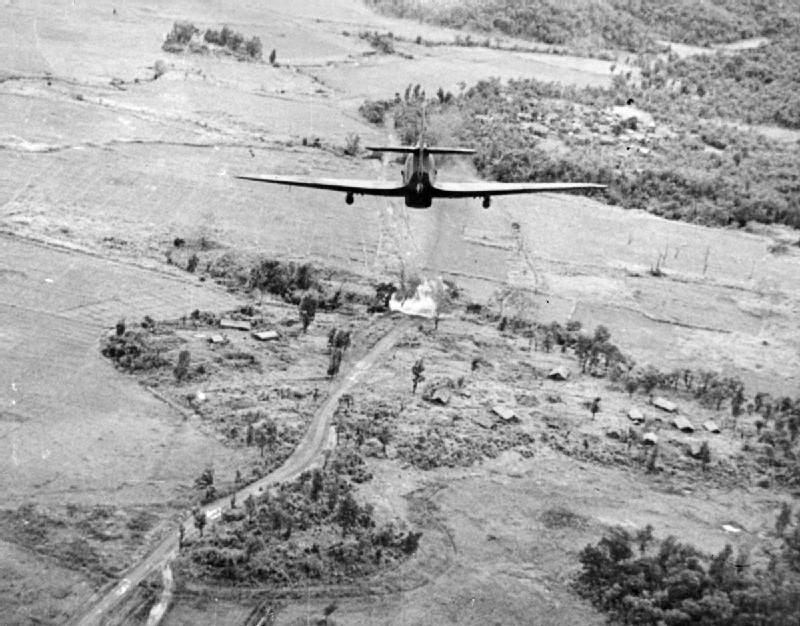
The early skirmishes set a tense backdrop for the intense battles at Tamu, Tiddim, and Sangshak, where the Allied forces faced relentless Japanese assaults.
At Tamu, the 20th Indian Infantry Division stood firm against the Japanese forces from March 7 to April 4, 1944, thwarting their attempts to capture the town essential for advancing towards Imphal. Meanwhile, at Tiddim, the 17th Indian Division endured fierce attacks, found themselves temporarily encircled, yet managed to regroup and reach the Imphal plain by April 4.
In Sangshak, under Lt. Col. John B. M. McKinnon, British and Indian troops valiantly resisted the Japanese 33rd Division. These battles underscored the logistical challenges faced by the Japanese, ultimately stalling their advance and allowing the Allied forces to consolidate.
Stalemate and Struggles on the Imphal Plain
Although the Japanese launched fierce attacks on the Imphal Plain in early April 1944, their momentum quickly faltered due to crippling supply issues.
You’d notice that the Japanese faced a stalemate as they struggled with severe logistical difficulties. Despite their intense efforts, the terrain and supply failures hindered their advances.
The Allied forces, particularly the 17th Indian Division, displayed remarkable resilience:
- They regrouped swiftly after an initial Japanese encirclement.
- Reached safety on the Imphal Plain by April 4, 1944.
- Endured the prolonged siege, preparing for eventual counterattacks.
Allied Counteroffensive and Tactical Advancements
By early May 1944, Allied forces seized a significant moment to regroup and launch a counteroffensive against the Japanese troops surrounding Imphal.
You’d witness the strategic brilliance of the IV Corps, led by Lieutenant General Geoffry Scoones, as they coordinated with the 5th and 23rd Indian Divisions. Their mission? Reclaim territory and push back entrenched Japanese forces.
Capturing key ridges proved essential, crippling Japanese defenses and skyrocketing Allied morale. The relentless Allied pressure, combined with Japanese supply shortages and starvation, forced a retreat of the Japanese 15th Division by late June.
On June 22, the British 2nd Division linked with the 5th Indian Infantry Division at Milestone 109, effectively breaking the siege of Imphal and halting the Japanese advance.
The Role of Air Operations and Reinforcements
Having reclaimed key territory and raised morale through a successful counteroffensive, Allied forces turned their attention to the skies above Imphal.
With air superiority firmly established, Spitfires dominated the airspace, enabling critical reconnaissance and support missions. This aerial advantage disrupted Japanese attacks and secured essential supply lines. Transport aircraft became the lifeline, delivering over 19,000 tons of supplies to beleaguered troops via parachute drops.
- Rapid reinforcements: The 5th Indian Division was airlifted from Arakan, bolstering defenses.
- Crucial resupply: Parachute drops replenished supply dumps, ensuring sustained combat readiness.
- Strategic coordination: Seamless integration of air and ground efforts led to protracted engagements that wore down enemy forces.
The USAAF’s strategic bombing campaigns during WWII significantly weakened Axis capabilities, showcasing the role of air operations in achieving military objectives. Ultimately, air operations and reinforcements were fundamental in sustaining the Allied position and paving the way for victory.
Impact and Legacy of the Battle of Imphal
While the Battle of Imphal marked a crucial turning point in World War II, its impact went beyond the immediate military victory. You see, the Allied victory wasn’t just about defeating Japanese forces; it shifted the entire Burma Campaign’s momentum.
The Japanese suffered around 30,000 casualties, greatly weakening their hold. This battle underscored the strategic importance of logistics, as the Allies expertly resupplied their troops through air drops, particularly during critical moments.
It’s no wonder the Battle of Imphal, alongside Kohima, is recognized as one of the major turning-point battles of the war. The Commonwealth forces didn’t just defend ground; they showcased resilience and strategic prowess.
This victory ultimately paved the way for the successful Allied campaign in Burma by 1945. The Allied invasion of Sicily in 1943, as part of the Italian Campaign, similarly demonstrated the strategic importance of forcing Axis powers to divert their forces, ultimately impacting the broader trajectory of the war.