

The Pearl Harbor National Memorial in Honolulu honors one of the most pivotal moments in American history—the December 7, 1941 attack that drew the U.S. into World War II. At its heart lies the USS Arizona Memorial, built above the sunken battleship where over 1,100 crew members lost their lives.
Visitors can explore exhibits, view historic footage, and take a solemn boat ride to the memorial itself. It’s a powerful reminder of the cost of war and the resilience that followed.
Image: Victor-ny, USS Arizona Memorial, CC BY-SA 3.0
The USS Arizona Memorial: Design and Significance
Standing as a solemn tribute to those who perished during the Pearl Harbor attack, the USS Arizona Memorial features a distinctive 184-foot-long design by Honolulu architect Alfred Preis.
The structure’s two peaks with a center sag symbolize “initial defeat and ultimate victory” during World War II Valor.
When you visit this Pearl Harbor National Memorial, you’ll find three main sections: an entry, an assembly room featuring 14 windows (representing the attack date), and a shrine. The marble wall inside bears the names of all 1,177 crew members killed.
At the heart of Battleship Row, you can pay respects by dropping flowers through the floor opening above the sunken vessel. The “black tears” of oil still leaking from the USS Arizona create a poignant reminder at this Pacific National Monument, connecting visitors to this pivotal moment in American history.
The memorial commemorates what President Roosevelt called a date of infamy, when Japan’s surprise attack killed nearly 2,400 Americans and propelled the United States into World War II.
Planning Your Visit to Pearl Harbor National Memorial
To make the most of your Pearl Harbor experience, set aside at least half a day for exploration. Begin at the Pearl Harbor Visitor Center, where you’ll find exhibits, the museum, and a compelling 23-minute documentary film about the attack.
Secure your free USS Arizona Memorial boat tickets early, as they’re distributed on a first-come, first-served basis through the National Park Service. You can reserve online up to two months in advance or try for same-day tickets.
While waiting for your shuttle boat departure, enhance your visit with an audio tour that guides you through the memorial’s significant sites. The boat transports you directly to the USS Arizona Memorial, where you’ll spend approximately 15 minutes reflecting on this pivotal moment in American history. The memorial honors the more than 2,400 lives lost during the surprise attack that ultimately propelled the United States out of isolationism and into World War II.
What to Experience at the Visitor Center
The Pearl Harbor Visitor Center serves as the gateway to your immersive journey through one of America’s most defining historical moments. You’ll explore The Road to War and Attack galleries, where historical artifacts, photographs, and video displays illuminate why the Japanese attacked Pearl Harbor and the events of December 7, 1941.
Your visit includes a moving 23-minute documentary film featuring actual attack footage before you board a US Navy-operated vessel to cross the harbor to the USS Arizona Memorial. There, you’ll stand above the sunken battleship where 1,102 sailors and Marines rest and view their names inscribed on the marble wall.
The surprise attack by Japan was photographed from Japanese planes and became one of the most iconic images of World War II.
The entire visitor experience at the Pearl Harbor National Memorial, including both the Visitor Center and USS Arizona Memorial, takes approximately 1 hour and 15 minutes.
The Black Tears: Oil Leakage and Ongoing Preservation Efforts
As you gaze down at the USS Arizona’s final resting place, you’ll notice a rainbow-colored sheen on the harbor’s surface—the famous “black tears” of oil still seeping from the sunken battleship over 80 years after that fateful December morning. This poignant phenomenon serves as a living memorial to the tragedy at Pearl Harbor.
The National Park Service diligently monitors the USS Arizona’s condition, balancing preservation with environmental concerns. You’ll learn how they’ve replaced the memorial’s marble wall twice—in 1984 and 2014—due to salt water erosion.
Experts continue to watch the battleship’s deteriorating bulkheads and oil tanks, concerned about potential increased leakage. Yet many consider these persistent black tears an integral part of the experience, a symbolic connection to those who made the ultimate sacrifice.
Beyond the Arizona: Additional Historic Sites at Pearl Harbor
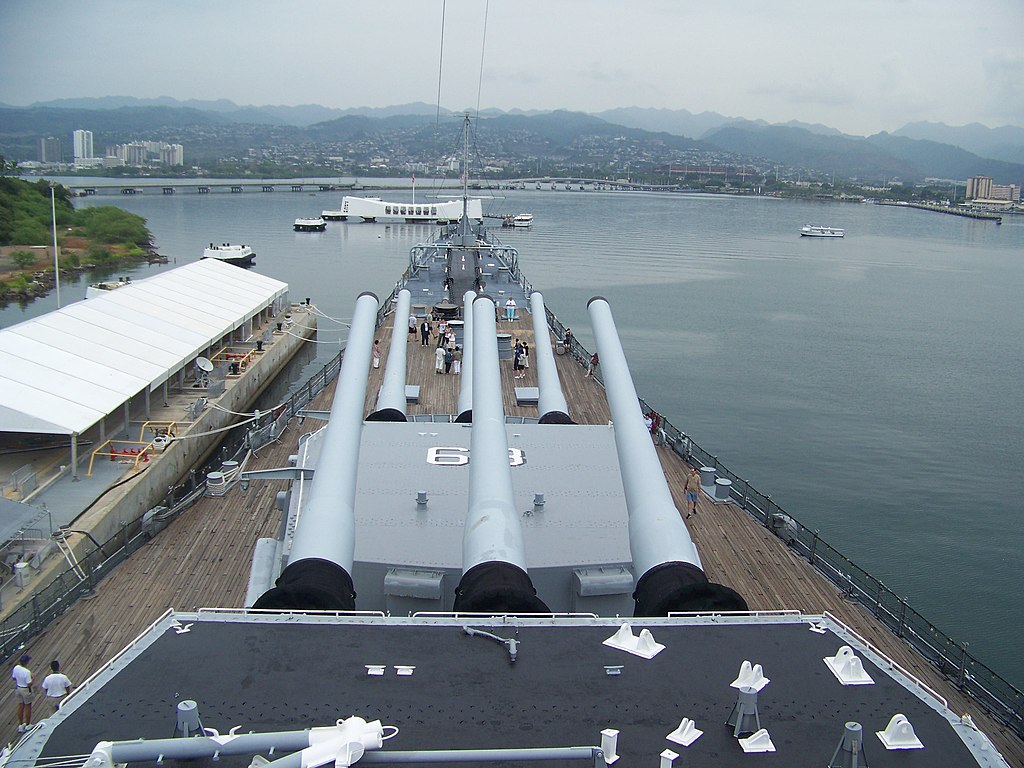
Image: Justin Brockie from Wolcott, Connecticut, USA, USS Missouri watching over USS Arizona – Pearl Harbor, CC BY 2.0
While the USS Arizona Memorial stands as the centerpiece of Pearl Harbor’s commemorative sites, you’ll find several other historically significant locations nearby that expand on Hawaii’s rich military and cultural heritage. After exploring the Battleship Missouri Memorial and USS Bowfin Submarine, venture beyond Pearl Harbor to discover:
- The National Memorial Cemetery of the Pacific (Punchbowl), a solemn tribute housing over 50,000 graves of military service members
- Iolani Palace, the only royal palace on American soil, once home to Hawaiian monarchs
- Kawaiahao Church, nicknamed the “Westminster Abbey of Hawaii,” built from coral stone in the 1830s
Don’t miss the Hawaii State Capitol with its symbolic Pacific Ocean moat and Honolulu City Hall’s art deco architecture. The Pearl Harbor Aviation Museum on Ford Island completes your historical journey.