

During WWII, the Jeep was your go-to for towing artillery thanks to its robust design and adaptability. It effortlessly managed light artillery like the M1 75mm pack howitzer, allowing quick repositioning on challenging terrains with its four-wheel drive. Half a million Jeeps guaranteed artillery was where you needed it, enhancing mobility and firepower. This vehicle’s reliability and versatility made it essential. Uncover more about how Jeeps became crucial for battlefield efficiency and strategic maneuvers.
The Jeep: A Key Player in WWII Combat
In the chaos of WWII, the Jeep emerged as a game-changer on the battlefield. You’d find this military vehicle enhancing mobile firepower with its unmatched versatility and off-road capabilities. Unlike the modern Jeep Wrangler, these wartime Jeeps were essential for towing artillery, enabling quick repositioning of firepower.
Imagine the Normandy beaches, where Jeeps transported critical artillery support, deftly maneuvering through challenging terrains. They didn’t just move supplies; they carried personnel and mounted weaponry, proving indispensable for Allied operations. With approximately half a million Jeeps produced, they became a common sight, underpinning the success of numerous campaigns.
Even General Dwight D. Eisenhower acknowledged their impact, seeing these military vehicles as pivotal to the Allies’ victory. The USAAF’s strategic bombing campaigns also played a crucial role in weakening Axis powers, complementing the Jeep’s contribution to ground operations.
Origins and Development of the Jeep
While the chaos of WWII loomed, the origins of the Jeep took shape in 1938 when the Bantam Car Company crafted a prototype to meet the U.S. Army’s needs for a lightweight, all-terrain vehicle. This groundbreaking design caught attention, leading to contracts in 1941 with Bantam, Willys Overland, and Ford. Together, they produced about half a million military Jeeps during World War II.
The name “Jeep” likely stems from its military label “General Purpose” or “G.P.,” morphing into the now-iconic term. Military Jeeps became vital for their versatility, handling tough terrains, and supporting diverse battlefield roles. These vehicles played a significant part in enhancing mobility and firepower, proving invaluable across Europe and the Pacific during the war.
Among the major manufacturers contributing to the war effort was North American Aviation, which produced approximately 26,000 aircraft units, showcasing the importance of industrial collaboration.
Jeep’s Role in Artillery Towing

Thanks to its robust design and adaptability, the Jeep played an essential role in artillery towing during WWII. You’d be amazed at how the Jeep’s role in mobile firepower transformed battlefield strategies. It wasn’t just a transport vehicle; it was a significant component of artillery towing.
With its powerful engine and off-road capabilities, the Jeep could tow light artillery like the M1 75mm pack howitzer with ease. Its lightweight build guaranteed that mobility wasn’t compromised, allowing for quick repositioning and effective fire support.
Imagine half a million Jeeps enhancing the efficiency of artillery operations. This meant infantry units always had the firepower they needed, when and where they needed it, making the Jeep indispensable in combat scenarios.
Maneuverability and Terrain Navigation
Artillery towing wasn’t the only area where the Jeep shined during WWII; its maneuverability and terrain navigation were comparably impressive.
Thanks to its lightweight design and four-wheel drive, the Jeep could tackle rough terrain that stopped heavier vehicles in their tracks. Here’s why it excelled:
- Maneuverability: With a turning radius of just 24 feet, you could quickly reposition it in tight battlefield scenarios.
- Terrain Versatility: Regardless of whether it was muddy fields, steep hills, sand, snow, or rocky ground, the Jeep maintained efficiency, enabling rapid support to frontline troops.
- Four-Wheel Drive: This feature guaranteed the Jeep handled challenging surfaces, making it an essential asset for artillery units needing to navigate dynamic environments.
Its rugged construction and reliable engine added to its operational success across diverse WWII landscapes.
Impact on Battlefield Strategy
As WWII unfolded, the Jeep’s remarkable ability to tow artillery pieces across unforgiving terrains fundamentally reshaped battlefield strategies.
By traversing the rugged landscapes of Normandy and beyond, the Jeep enabled rapid deployment of critical firepower, directly impacting key operations. You’d find that with its impressive towing capacity, this versatile vehicle could transport howitzers and other artillery, enhancing the mobility and responsiveness of Allied forces.
Commanders could quickly adapt to changing battle conditions, repositioning fire support as needed. The Jeep’s dual role in transport and artillery towing meant you could efficiently coordinate logistics, ensuring artillery was always where it was most needed.
With around half a million Jeeps in action, they became indispensable in executing strategic maneuvers across Europe and the Pacific.
Stories From the Front Lines
Tales from the battlefront vividly illustrate the Jeep’s vital role in WWII. Imagine you’re a soldier in the thick of combat, relying on the Jeep’s unmatched ability to tow light artillery like the M101 howitzer. Its lightweight design and robust engineering guarantee you can reach frontline positions quickly, ready to provide critical fire support.
Veterans’ stories often highlight:
- Speed and Agility: The Jeep’s capability to navigate rugged terrain swiftly guarantees artillery support is never far behind.
- Versatility: From transporting personnel to hauling important equipment, the Jeep adapts to your unit’s needs seamlessly.
- Reliability: In diverse theaters of war, the Jeep consistently delivers, making it an invaluable asset to military service.
Your success depends on this unsung hero of mobile firepower.
Maintenance and Challenges Faced
While the stories from the front lines highlight the Jeep’s essential role during WWII, keeping these historic vehicles operational presents its own set of challenges.
Maintenance for WWII Jeeps can be intimidating due to the scarcity of original parts. You’re often forced to rely on specialized suppliers for repairs and restoration. Many of these vintage military Jeeps were left in disrepair post-war, so restoration projects demand both time and investment.
Authentic components are hard to source because production ceased over seven decades ago, complicating your efforts. Despite these hurdles, the nostalgic and cultural significance of WWII Jeeps drives enthusiasts like you to commit to their upkeep.
A well-maintained and restored Jeep can be worth between $5,000 and $20,000.
The Jeep’s Evolution Post-War
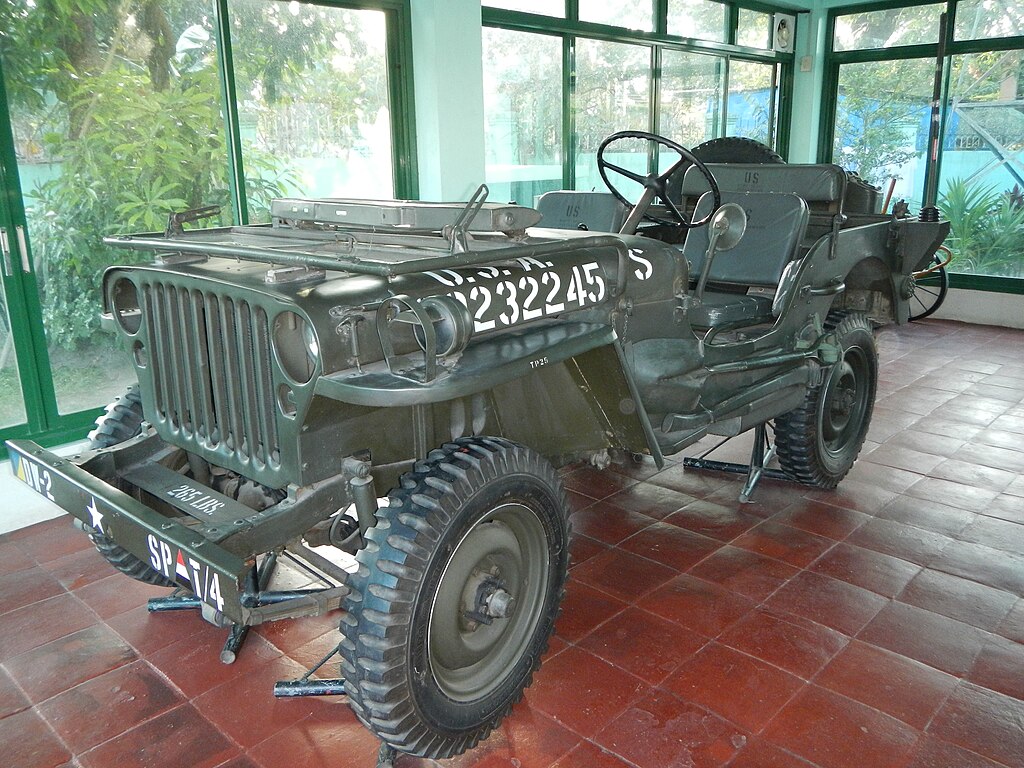
Image: Ramon FVelasquez, Willys MB Jeep displayed at the Ramon Magsaysay Ancestral House, CC BY-SA 3.0
Following WWII, the Jeep transformed considerably from a military workhorse to a beloved civilian vehicle.
As the Willys Jeep evolved to a civilian model, it underwent significant design changes focused on safety and comfort. You’d notice how the ruggedness of the original reconnaissance vehicle morphed into something more versatile for everyday use.
Consider these key developments:
- Introduction of the CJ (Civilian Jeep): This model set the stage for recreational use and off-roading, redefining the Jeep’s role.
- Brand Expansion: By the late 20th century, the Jeep lineup grew to include models like the Cherokee and Wrangler, each offering unique features.
- Military to Civilian Shift: Though replaced by the Humvee in military service, the Jeep maintained a robust civilian presence.
These changes marked a new phase for the Jeep.
Cultural Legacy and Historical Significance
The Jeep’s post-war transformation into a civilian icon didn’t overshadow its storied past in military service. Its cultural legacy is rooted in its critical role during WWII, where it proved vital for artillery towing and more.
You can picture these sturdy machines effortlessly maneuvering tough terrains, hauling 105mm howitzers to strategic positions. Aside from artillery, Jeeps also carried machine guns, serving as mobile command centers that supported quick deployments and decisive actions.
With about half a million manufactured during the war, they were a reflection of American ingenuity. Veterans’ stories often highlight the Jeep’s reliability and versatility, cementing its status as an important wartime asset.
This legacy persists, celebrating the Jeep’s impact on military history and its enduring symbol of resilience.
Preserving History: Restoring WWII Jeeps
Restoring WWII Jeeps is more than a hobby; it’s a dedication to preserving a piece of history. You commence on a quest through military history, using the restoration process to bring vintage vehicles back to life. This requires specialized knowledge and access to rare parts, as original components aren’t easy to find.
Here’s what you need to contemplate:
- Research: Immerse yourself in extensive research to guarantee authenticity, using period-correct materials matching military specifications.
- Value: A well-restored Jeep can greatly increase in value, fetching between $5,000 and $20,000.
- Legacy: Participate in parades and events to share your work and honor the legacy of these crucial vehicles.
Through restoration, you’re not just reviving a vehicle; you’re preserving history for future generations.