

The Burma Campaign during WWII saw Allied forces engaging in intense jungle warfare to reclaim the essential Burma Road from the Japanese. You’ll encounter brutal conditions like dense jungles, severe monsoon rains, and devastating diseases. Allied troops, including British, Indian, and African units, overcame logistical challenges and political complexities to guarantee crucial supplies reached China. Notable battles and infrastructure developments played key roles. Plunge deeper, and you’ll uncover how these efforts shaped the broader conflict.
Historical Context and Strategic Importance
Although often overshadowed by more famous battles in the Pacific, the Burma Campaign held immense strategic significance during World War II.
The Burma Road was a critical supply line for China, especially after the Japanese invasion in 1942. When Japanese forces captured Rangoon and central Burma, the Allied forces faced a formidable task: reopening this crucial route. The Japanese aimed to cut off these supply lines from Rangoon to Mandalay, which would cripple the Allied operations in the region. Generals Alexander and Stillwell led the charge to maintain these connections despite overwhelming odds.
The construction of a new road from Ledo in Northern India underscored the logistical difficulties, battling harsh monsoon rains and resource shortages to re-establish this indispensable lifeline.
Troop Contributions and Operational Challenges
Despite the looming challenges, the Burma Campaign was a demonstration to the diverse and significant troop contributions from across the globe.
British and Indian troops, alongside 100,000 East and West African colonial soldiers, were crucial in the campaign. You also had the Chinese Expeditionary Force joining the fray, while Merrill’s Marauders took on frontline combat with significant losses.
The operational challenges were immense, with dense jungles and turbulent rivers complicating logistics. The lack of transport infrastructure forced reliance on air support for supplies and evacuations. You needed an air bridge to guarantee troop movements and medical assistance.
Furthermore, the political complexity among Allied forces led to differing strategic priorities, further complicating coordination and impacting the effectiveness of these diverse contributions.
Conditions and Challenges in Burma
Steering through the harsh conditions of Burma was a monumental challenge that tested the resolve of Allied forces. The extreme climate, featuring intense cold, sweltering heat, and relentless monsoon rains, disrupted troop movements and operations.
Guiding through dense jungles, turbulent rivers, and rugged mountains proved to be formidable logistical challenges, complicating the supply route efforts essential for the campaign’s success.
Tropical diseases like malaria, cholera, and typhus decimated troops, severely affecting their health and combat readiness. Overcoming these health challenges was as critical as any battle.
Furthermore, the region’s diverse cultures and tribes demanded careful strategic consideration, providing a layer of complexity. Reconnecting the supply route via a new road faced setbacks from monsoon rains and limited resources, exacerbating logistical hurdles.
Logistics and Infrastructure Development
The Allies faced numerous logistical hurdles in Burma, demanding the construction of a new road from Ledo, India, to restore the significant Burma Road, disrupted by Japanese forces. This ambitious logistics and infrastructure development project, known as the Ledo Road, began in late 1942. However, it was plagued by monsoon rains and limited resources, hampering supply efforts to Chinese troops.
You’d find that air support was fundamental, with American planes risking high-altitude flights over the Himalayas to deliver supplies. Furthermore, a fuel pipeline was developed, ensuring a steady supply of gasoline and oil necessary for military operations. The USAAF’s strategic bombing campaigns significantly weakened Axis military and industrial capabilities, which contributed to the overall success of the Allies.
Together, these efforts underlined the pivotal role of logistics in maintaining Allied operational effectiveness in the challenging Burmese terrain.
Key Military Engagements and Outcomes
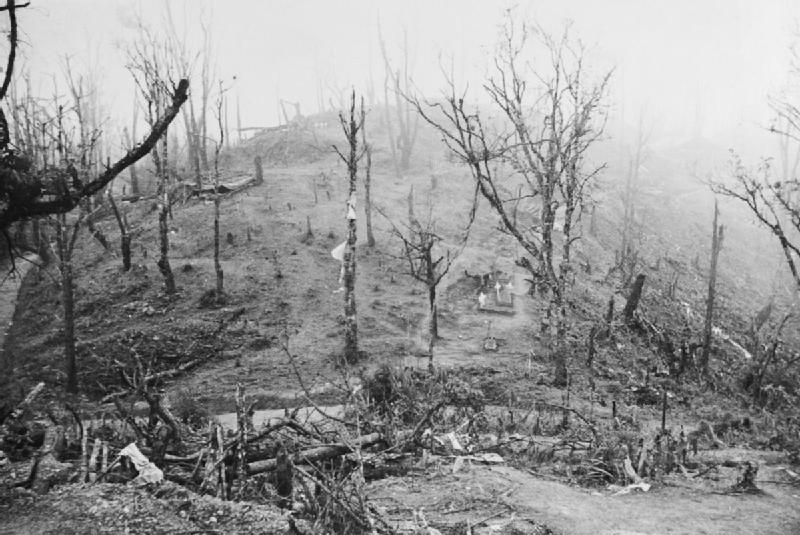
Allied forces faced several vital battles during the Burma Campaign, each shaping the path to victory. The British Indian 14th Army pushed the front lines in Arakan, while General Stilwell’s infantry divisions focused on the Ledo Road campaign.
Chindit patrols, with their legendary status, disrupted Japanese forces’ communication lines, including daring glider landings at Broadway. Despite relentless air raids, the Kohima garrison held firm, receiving essential Allied air supply drops.
Key advances included capturing the Mogan railway station and repairing the Mito airfield after a grueling 78-day siege. The successful traversal of the initial convoy along the completed Ledo-Burma Road marked a major logistical triumph, supporting China and solidifying the Allied strategy in the region.
The Role of Diverse Allied Forces
Despite the challenging terrain and climate of the Burma Campaign, diverse Allied forces plunged together to achieve remarkable success. You’d find Chinese troops playing an essential role alongside British, American, and African colonial forces.
Allied commanders like Brigadier General Frank Merrill and Major General Liao Yao-hsiang integrated their leadership, demonstrating a unified strategy in jungle warfare. Merrill’s Marauders, with 3,000 all-American soldiers, became legendary for their daring operations.
Meanwhile, the Chinese Expeditionary Force and thousands of East and West African troops showed the campaign’s multinational scope. Furthermore, the Burma National Army’s revolt against the Japanese further complicated the dynamics.
This collaboration underscored the Allies’ strength, as the diverse Allied forces combined to navigate the formidable challenges of the Burma Campaign. The Royal Air Force, with its strategic bombing capabilities and multinational pilot composition, played a crucial role in providing aerial support during this campaign.
Impact of Geographical Characteristics on Warfare
Amidst the diverse forces collaborating to tackle the Burma Campaign, you’ll find the harsh geographical conditions played a likewise decisive role in shaping military operations.
The dense jungles and mountainous terrain complicated troop movements and disrupted supply lines, making it vital to control key geographical points. Combat operations often unfolded along narrow roads and defiles, emphasizing the strategic importance of these areas.
Extreme weather conditions, particularly the heavy monsoon rains, further hampered efforts, causing delays and challenging military engineering tasks. Without established transport infrastructure, you’d to devise creative logistical solutions. Air transport became fundamental for moving supplies and evacuating the wounded.
Moreover, the threat of diseases like malaria and cholera loomed large, impairing troop health and effectiveness.
The Political Complexity of the Campaign
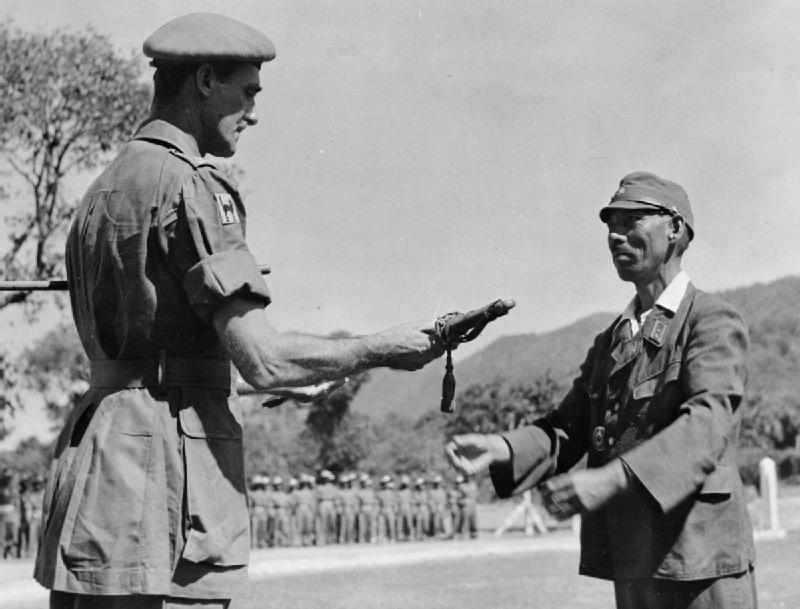
While the dense jungles and challenging terrain of Burma shaped military strategies, the political intricacies of the campaign added another layer of complexity.
On the Allied side, differing strategic priorities created tension. You’d see American forces, led by General Joseph Stilwell, focusing on reopening a supply route to China, while British commanders prioritized defending India and maintaining colonial control. This political complexity often led to disagreements on operational objectives and resource allocation.
To address these challenges, a unified command structure was established at the Quebec Conference, creating the Southeast Asia Command.
Key political considerations included:
- Strategic Priorities: Differing goals between American and British forces.
- Unified Command: Needed to manage diverse national interests.
- Troop Deployment: Reluctance to send Indian troops outside India.
Legacy and Significance of the Burma Campaign
The legacy of the Burma Campaign is a tribute to the resilience and collaboration of the Allied forces in the Pacific Theatre during World War II. It was the only continuous land campaign by Western Allies, showcasing their determination against Japan.
Reopening the supply line of the Burma Road was essential, aiding China’s war efforts and highlighting the significance of logistics in warfare. You can appreciate the strategic use of air transport to overcome Burma’s challenging terrain and adverse weather conditions.
Despite significant casualties, including over 2,394 losses among Merrill’s Marauders and deaths due to disease, the campaign demonstrated the harsh realities of jungle warfare.
The infrastructure established, like the Ledo Road, reinforced critical connections between India and China, enhancing future strategic operations.