

Several World War II aircraft are often highlighted for their pilot-friendly characteristics. Notable examples include the forgiving TF-51D Trainer, the robust P-47 Thunderbolt, and the agile Supermarine Spitfire. Each of these planes had features that made them stand out in terms of ease of flight, impacting both pilot training and combat effectiveness. Let’s explore which fighter truly earned the title of the easiest to fly and why.
P-51 Mustang

The P-51 Mustang was widely regarded as a pilot’s dream among WWII fighter aircraft due to its exceptional stability and forgiving flight characteristics. If you’re seeking an easier-to-handle wartime fighter, the P-51 Mustang is an excellent choice. Pilots appreciated the steerable tail wheel, which simplifies taxiing and ground handling—often challenging in other taildragger designs. This feature makes the P-51 Mustang a standout for both novice and experienced aviators.
In addition to its ease of flight, the P-51 Mustang boasted impressive endurance and performance capabilities, enabling long missions with minimal fatigue. The engine management system is similar to those in modern aircraft, making it easier for newer pilots to learn. Although the aircraft’s high stall speed of approximately 100 mph requires careful handling during low-speed maneuvers, mastering the P-51 Mustang is a highly rewarding experience. Combining ease of use with unmatched performance, the P-51 Mustang is often considered the best fighter of its era.
TF-51D Trainer
The TF-51D Trainer was an ideal choice for beginners due to its combination of simplicity and performance. Its user-friendly design prioritizes stable flying, free from the complexities of weapon systems, allowing you to focus on mastering basic flight mechanics. Its easily accessible flight simulators offered an accessible way to gain practical experience without incurring any costs.
Aircraft Benefits
One major advantage of the TF-51D Trainer was its simplicity, which makes it ideal for novice pilots. Without the complexity of advanced weapon systems, you can focus on mastering fundamental flying skills. The TF-51D bridges the gap between World War II aircraft and modern planes, offering a familiar engine management experience.
The design emphasized straightforward handling, allowing you to concentrate on essential skills like take-offs, landings, and basic maneuvers. You can practice Immelmann turns and river racing without the stress of combat, improving your flight control and situational awareness.
The TF-51D’s forgiving flight characteristics helped to build confidence, making it an excellent starting point before progressing to more challenging aircraft. This combination of simplicity and foundational training made the TF-51D Trainer an invaluable resource for any aspiring pilot aiming to master the skies.
Simplified Flight Mechanics
As a novice pilot stepping into the cockpit of the TF-51D Trainer, you’ll quickly appreciate the aircraft’s simplified flight mechanics. This free variant of the iconic P-51 Mustang is designed to strip away the complexities of weapon systems, allowing you to focus entirely on mastering basic flight techniques. With its stable flight profile, the TF-51D makes managing engine performance and understanding aerodynamics more approachable for beginners.
One of the standout features is the steerable tail wheel, which greatly aids in taxiing and ground handling. For new pilots shifting to taildraggers, this is a game-changer, offering greater control and confidence while on the ground.
Training in the TF-51D also includes exercises like practicing Immelmann turns and river racing. These activities are invaluable for honing control and maneuverability skills, preparing you for more advanced flying with a solid foundation devoid of combat system distractions.
FW-190D
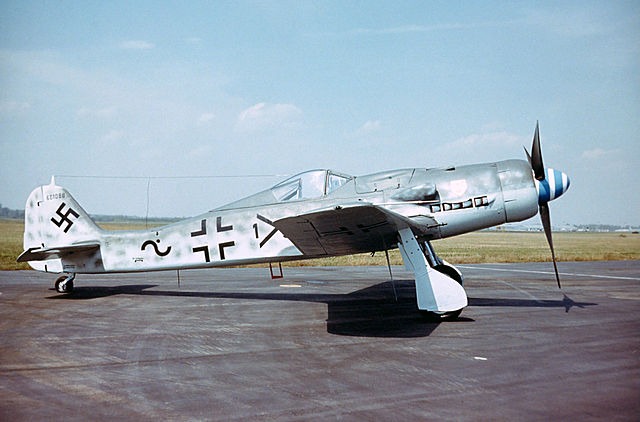
When you fly the FW-190D, you’ll appreciate its excellent handling and maneuverability, making it a favorite among pilots. The powerful Junkers Jumo 213A V-12 engine guarantees impressive speed and climb rates, critical for effective dogfights. Furthermore, its ease of handling allows novice pilots to adapt quickly, benefiting from its stability and visibility.
Handling and Maneuverability
The FW-190D excels in handling and maneuverability, making it ideal for pilots transitioning from simpler planes. Its user-friendly characteristics distinguish it from many contemporary fighters. The aircraft boasts an exceptional roll rate and responsiveness, enabling effective dogfighting techniques across various combat scenarios.
Inside the cockpit, intuitive controls and layout simplify operations, allowing pilots to focus on combat rather than complex flight mechanics. The Fw-190D’s ability to perform high-speed rolls and tight turns offers a significant advantage in evading enemy fire and positioning for attacks.
With a top speed of approximately 400 mph at altitude, the FW-190D outmaneuvered many contemporaries, easing evasive maneuvers. Its powerful BMW 801 radial engine provides robust performance and acceleration, enhancing the pilot’s ability to react swiftly during engagements. These features collectively make the Fw-190D not only a highly effective combat aircraft but also one that is enjoyable and relatively easy to fly.
Engine Performance Capabilities
Powered by the BMW 801 radial engine, the FW-190D, or “Dora,” is notable for its formidable engine performance. This engine provides approximately 1,750 horsepower, enabling the aircraft to reach a maximum speed of around 688 km/h (427 mph) at altitude. This makes it competitive with other top fighters of its era, giving it an edge in both offensive and defensive maneuvers.
The Dora boasts a service ceiling of about 12,500 meters (41,000 feet), making it capable of engaging high-altitude bombers and fighters effectively. This high-altitude performance is crucial for maintaining air superiority and intercepting enemy threats before they reach their targets.
With a range of approximately 800 kilometers (500 miles), the Fw-190D is well-suited for extended missions. This range allows for a variety of mission types, from interceptions to ground attacks, without the constant need for refueling.
Pilot Training Benefits
Among the benefits of the FW-190D, its versatility and ease of handling particularly stand out, making it an excellent choice for pilot training. Transitioning from beginner aircraft to the FW-190D is seamless due to its forgiving design, which helps build confidence during training exercises with its user-friendly flight characteristics.
The straightforward controls of the FW-190D simplify understanding basic flight mechanics. As a trainee pilot, you’ll find it easier to grasp the fundamentals without feeling overwhelmed. The aircraft provides exceptional feedback during maneuvers, allowing you to better understand its limits and performance. This immediate and clear response is crucial for developing competence as a pilot.
Additionally, the FW-190D’s robust build and reliable engine significantly contribute to a safer training environment. The reduced likelihood of mechanical issues lowers the risk of accidents during early flying experiences. Knowing you are in a sturdy, reliable aircraft allows you to focus more on learning and less on worrying about potential malfunctions. Overall, the FW-190D ensures a smoother, safer, and more effective pilot training experience.
Anton Aircraft
The Anton aircraft significantly simplified pilot training during World War II due to its straightforward handling characteristics. Its design prioritizes basic gunnery, allowing novice pilots to focus on mastering essential flight skills without the complexity of advanced weaponry.
The aircraft’s forgiving flight dynamics offer a smoother learning curve compared to more complex models. This stability is crucial for building confidence during initial training stages, enabling pilots to master fundamental maneuvers and techniques more quickly.
A standout feature of the Anton aircraft is its user-friendly nature, which facilitates rapid adaptation to various flight maneuvers and combat scenarios. Even when faced with challenging exercises, the aircraft’s stability and predictable response instill a sense of control. This adaptability not only enhances training efficiency but also prepares pilots for the dynamic conditions of combat.
P-47 Thunderbolt

The P-47 Thunderbolt, renowned for its robust construction and stable flight characteristics, is considered one of the more user-friendly WWII fighters, particularly for novice pilots. Featuring a large radial engine and a wingspan of 40 feet 9 inches, the P-47 offered excellent visibility and a forgiving nature during flight operations.
The Thunderbolt excelled at high altitudes and was armed with eight .50 caliber machine guns, making it effective in both air-to-air and ground attack roles. Despite its considerable size and weight, the P-47 was praised for its ease of handling and stability, making it suitable for pilots of varying experience levels.
Training with the P-47 would likely emphasize its forgiving landing characteristics, which allowed pilots to gain confidence quickly and transition smoothly to more complex aircraft. The Thunderbolt’s design ensured that even novice pilots could manage it effectively, benefiting from its robust construction and reliable performance. As a WWII pilot flying the P-47, you would experience a blend of power and ease, making your missions both effective and less intimidating.
Messerschmitt Bf-109

The Messerschmitt Bf-109 was a fighter aircraft distinguished by its speed and agility. Renowned as one of the most effective fighters of World War II, it excelled particularly at high altitudes. Central to its performance was a powerful Daimler-Benz engine, enabling the Bf-109 to reach speeds of up to 350 mph, outperforming many contemporary aircraft.
Armed with two 7.92 mm MG 17 machine guns and two 20 mm MG 151 cannons, the Bf-109 boasted significant firepower, ideal for dogfights. Pilots praised its excellent climb rate and maneuverability, although it required careful handling to avoid stalling during high-speed turns, making it a formidable opponent in aerial combat.
The Bf-109 underwent numerous iterations throughout the war, with over 33,000 units built, making it the most widely produced fighter aircraft of the conflict. Each version brought improvements, but the core of its design—speed, agility, and firepower—remained consistent. Flying the Bf-109 during WWII would have offered a thrilling and demanding experience for any pilot.
Supermarine Spitfire
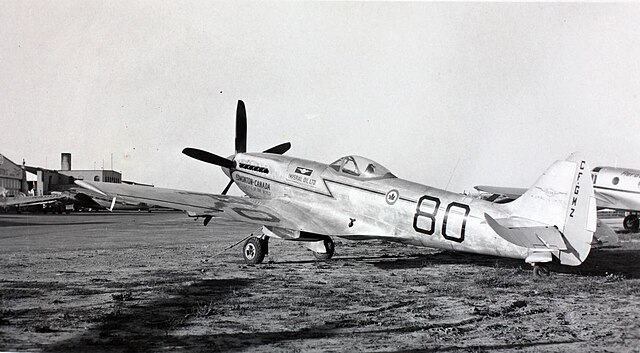
While the Messerschmitt Bf-109 was a formidable adversary, the Supermarine Spitfire achieved iconic status in WWII aviation history. Its speed and agility were immediately apparent upon taking flight. With an advanced all-metal airframe and an elliptical wing shape, the Spitfire offered exceptional maneuverability, making it a favorite among pilots.
Flying the Spitfire came with its own set of challenges. Its high stall speed required skilled handling, particularly during low-speed maneuvers and landings. This meant that while the Spitfire could outperform many enemy aircraft, it demanded more experience and finesse from its pilots compared to some other fighters of the time.
Key features of the Spitfire include:
| Feature | Description |
|---|---|
| Speed | Renowned for its high speed |
| Agility | Exceptional due to its elliptical wing shape |
| Airframe | Advanced all-metal design |
| Operational Service | Entered service in August 1938 |
| Combat Effectiveness | Credited with shooting down 529 enemy aircraft during WWII |
Pilots had to be highly skilled to maximize the Spitfire’s capabilities, but its performance in combat made the effort worthwhile.
Hawker Hurricane
Among the many fighters of WWII, the Hawker Hurricane stands out for its resilience and reliability. Serving as the backbone of the RAF Fighter Command during the Battle of Britain, it played a crucial role in securing the skies. By September 1940, 33 squadrons of Hurricanes were operational, contributing significantly to the RAF’s efforts.
The Hurricane was responsible for 656 enemy aircraft kills, making it the most successful RAF fighter of the conflict. Its stable and rugged design allowed for easier maintenance compared to the more complex Spitfire. The Hurricane’s traditional wood and metal construction added to its durability and reliability in combat.
Key reasons why the Hawker Hurricane is memorable include:
- Resilient and reliable in combat
- Easier to maintain
- Most successful RAF fighter with 656 kills
- Durable wood and metal construction
- Significant role in the Battle of Britain
Primarily deployed against German bombers, the Hurricane enabled the more agile Spitfires to engage enemy fighter aircraft. This strategic division of labor made the Hurricane an indispensable asset to the RAF during one of the most pivotal periods of the war.
P-39 Airacobra

The P-39 Airacobra was an innovative aircraft during WWII, distinct from the more widely known Hawker Hurricane. One of its key features was the tricycle landing gear, which provided better visibility and easier handling during take-offs and landings compared to traditional taildraggers.
Powered by an Allison V-1710 engine, the P-39 could reach speeds of up to 360 mph, making it competitive at lower altitudes. Its unique mid-mounted engine design allowed for a nose-mounted 37mm cannon, providing significant firepower despite its moderate speed.
The P-39 had a relatively high accident rate of 0.61 deaths per 1,000 flight hours and was often used to train new pilots. This indicates that while it was user-friendly, it still required careful handling. The aircraft excelled in ground attack missions and low-altitude engagements, contributing to its operational success, particularly in the Pacific Theater.