

During World War II, the United States produced nearly 300,000 military aircraft, with a significant portion being fighter planes such as the iconic P-51 Mustang and the formidable P-47 Thunderbolt. This massive production effort was made possible through substantial government support and funding, along with innovative manufacturing techniques. Key strategies included the establishment of large-scale production facilities, the utilization of assembly line methods, and the mobilization of a skilled workforce.
This unprecedented level of aircraft production had a profound impact on military operations, providing the U.S. and its allies with a decisive aerial advantage. To fully understand the scope of this wartime effort, it is essential to examine the specific policies and practices that facilitated such impressive output.
Aircraft Production Growth

The dramatic growth in U.S. aircraft production during World War II is astounding. Production numbers soared from under 3,000 planes in 1939 to nearly 300,000 by the war’s end. This surge wasn’t just about quantity; it also involved the quality and variety of aircraft produced. The U.S. Army Air Forces, which evolved from the Army Air Corps, saw its fleet expand to around 80,000 aircraft, with a significant portion being fighter planes like the P-51 Mustang and P-47 Thunderbolt. These models became icons, essential in securing air superiority.
The rapid industrialization of this period, incorporating mass production techniques from the automotive industry, made it possible to produce thousands of these fighter aircraft efficiently. Over 100 different types of aircraft were manufactured, showcasing the versatility and adaptability of American industry during the war.
This massive production effort was instrumental in the Allied victory. The ability to produce such a vast number of fighter aircraft enabled the U.S. to dominate the skies, and the strategic deployment of these planes by the Army Air Forces played a critical role in turning the tide of World War II.
Government Support and Funding
Amid the growing tensions of 1939, President Roosevelt requested $300 million for the Army Air Corps, emphasizing the urgent need for increased aircraft production. This significant request underscored the critical role of government support in bolstering the nation’s military aircraft capabilities. Congress swiftly responded by authorizing the procurement of 3,251 aircraft, setting the stage for an unprecedented expansion in aircraft production.
The extent of the government’s support was extensive and multifaceted:
- Educational Orders: The government placed orders aimed at developing the skills and capacity for aircraft manufacturing, ensuring a well-trained workforce.
- New Government-Built Plants: Facilities were established to support private firms, fostering a collaborative industrial effort in aircraft production.
- Funding Mechanisms: The $300 million request was just the beginning, as continued financial backing enabled rapid scaling of production.
- Massive Output: These efforts culminated in the U.S. producing nearly 300,000 military aircraft by the end of World War II.
This robust network of government support was essential in meeting production demands, ultimately transforming the Army Air Corps into a formidable force. The collaboration between the government and private industry was critical in achieving such remarkable production feats.
Fighter Plane Types
During World War II, the U.S. produced a remarkable array of fighter planes tailored to meet diverse air combat demands. Among the most iconic was the P-51 Mustang, with around 18,000 units produced. Renowned for its exceptional range and performance, the P-51 Mustang revolutionized bomber escort missions deep into enemy territory.
Another significant fighter was the P-47 Thunderbolt, with nearly 15,000 units produced. Known for its durability and heavy firepower, the P-47 excelled in ground-attack missions and served as a reliable bomber escort.
The P-38 Lightning, with its unique twin-boom design, saw around 10,000 units produced. This versatile aircraft performed admirably in both fighter duties and bomber escort missions.
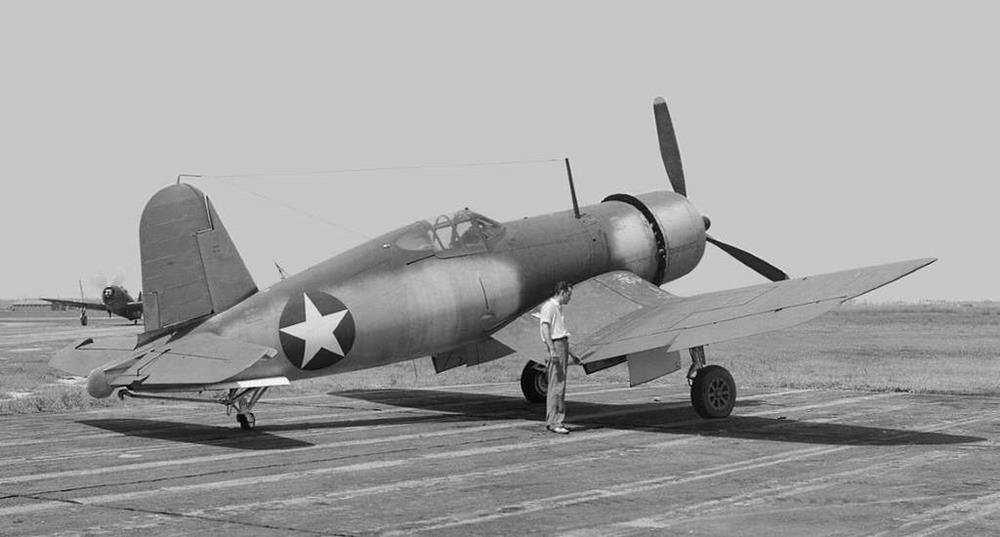
Additionally, the U.S. manufactured approximately 9,800 F4U Corsairs. Recognizable by their distinctive gull-wing design, Corsairs proved effective in both air-to-air combat and ground-attack roles.
Manufacturing Collaboration
U.S. fighter planes like the P-51 Mustang and P-47 Thunderbolt were the result of extraordinary manufacturing collaboration during WWII. U.S. aircraft manufacturers produced approximately 300,000 planes, significantly enhanced by improved production efficiency. This substantial output was achievable through a synergy between various industries and government initiatives.
Here’s how manufacturing collaboration played a crucial role:
- Automotive Industry Contributions: Companies such as Ford repurposed their facilities, like the Willow Run plant, to mass-produce military aircraft, significantly boosting production efficiency.
- Cross-Manufacturer Production: Aircraft manufacturers often produced models designed by other companies, diversifying aircraft types and increasing overall output.
- Government Support: The U.S. government established new plants and provided funding to bolster production capabilities, ensuring manufacturers met the war’s urgent demands.
- Central Coordination: The Office of Production Management coordinated war production efforts, underscoring the importance of collaborative manufacturing to streamline processes and optimize efficiency.
Impact on Military Operations
U.S. fighter planes significantly influenced combat strategy during WWII by ensuring air superiority and providing critical support to ground operations. Their impact extended beyond WWII, playing pivotal roles in the Korean Conflict as well. By examining their contributions, one can understand how these aircraft shaped both immediate military outcomes and future combat tactics.
Influence on Combat Strategy
Fighter planes produced by the United States during WWII greatly reshaped combat strategy and military operations. With approximately 300,000 military aircraft produced, many of which were fighter planes, the U.S. managed to achieve air superiority in both the European and Pacific theaters. This dominance was crucial for protecting bombers and engaging enemy aircraft effectively.
These military aircraft influenced combat strategy in several key ways:
- Air Superiority: High-performance fighters like the P-51 Mustang and P-47 Thunderbolt were instrumental in securing the skies, ensuring U.S. forces maintained control over strategic areas.
- Bomber Protection: These fighter planes escorted bombers on long missions, reducing losses and increasing the effectiveness of bombing campaigns.
- Jet-Powered Innovation: The introduction of jet-powered fighters towards the war’s end marked a shift in combat strategy, emphasizing speed and agility, changing the dynamics of aerial engagements.
- Tactical Evolution: High kill-to-loss ratios demonstrated by aircraft such as the F4U Corsair and F6F Hellcat influenced future air combat tactics, making speed, maneuverability, and firepower key elements of military strategy.
Role in Korean Conflict

Building on advancements in combat strategy from WWII, the role of U.S. fighter planes in the Korean Conflict showcased their versatility and effectiveness. F-51 Mustangs, repurposed as bomb trucks for ground support missions, continued to prove their worth on the battlefield. Initially, B-29 Superfortresses were used for daytime bombing raids until the emerging threat of MiG-15s necessitated a strategic shift.

The conflict also highlighted the military’s reliance on older aircraft like the F4U Corsairs and F6F Hellcats, driven by cost considerations in the early stages. However, it marked a crucial shift from propeller-driven planes to high-performance jets. The F-86 Sabre emerged as the star of air combat, ushering in a new era of jet-powered aircraft. This evolution fundamentally changed air superiority tactics, making the Korean War a significant chapter in the advancement of U.S. military aviation.
Legacy and Commemoration
The legacy of U.S. fighter planes produced during WWII is profound and enduring. These aircraft, often called warbirds, are celebrated and preserved today, with iconic models such as the P-51 Mustang, P-47 Thunderbolt, and F4U Corsair leaving a lasting imprint on aviation history.
To understand this legacy and commemoration, consider the following aspects:
- Airshows and Museums: Warbirds are showcased at airshows and museums, where their engineering marvels and critical combat roles are highlighted.
- Preservation Efforts: Many WWII aircraft are meticulously maintained and restored to remain operational, allowing for a tangible connection to the past and an appreciation of wartime sacrifices.
- Commemorative Events: Events like those honoring the Doolittle Raid educate future generations about significant missions and the bravery of pilots, promoting historical awareness.
- Inspiration for Modern Aviation: The design and performance of these WWII aircraft continue to inspire today’s aviators and engineers, influencing modern aeronautical advancements and strategies.