

During World War II, you’d find women serving vital roles that reshaped military involvement. As members of the Women’s Army Auxiliary Corps, they worked in clerical positions, as nurses, and communication operators. Female pilots in WASP and ATA programs ferried aircraft, towed targets, and transported cargo. In combat zones, they provided critical medical care. Women excelled in cryptography, intelligence, and technical positions, deciphering codes and maintaining military machinery. These contributions challenged societal norms, paving the way for future gender equality. Curious about their lasting impact and transformation of gender roles post-war? There’s much more to uncover.
Women in Auxiliary Corps
During World War II, women played significant roles in the military by joining different auxiliary corps. You might not realize it, but their auxiliary contributions were imperative in supporting military operations. Women served in roles such as clerks, nurses, and communication operators, which freed up men for combat roles. By stepping into these positions, they guaranteed that military operations ran smoothly and efficiently.
Imagine the wartime experiences these women faced. You’d find them working long hours under high-pressure conditions, often in environments that were mainly male. Despite these challenges, they demonstrated resilience and dedication. For example, in the Women’s Army Auxiliary Corps (WAAC) and its successor, the Women’s Army Corps (WAC), women took on roles that were crucial for the war effort, such as cryptography and radio operations.
Through these auxiliary contributions, women’s presence in the military reshaped societal norms and expectations. They proved their capabilities and laid the groundwork for future generations of women in the armed forces. As you reflect on their impact, consider how these wartime experiences not only supported the military’s mission but also began to redefine women’s roles in society.
Female Pilots and Aviation Roles
Surprisingly, women weren’t just limited to ground roles during World War II—they soared to new heights as pilots and aviators. You might find it fascinating that female aviators played significant roles in aviation, proving their skills and determination. They were part of programs like the Women Airforce Service Pilots (WASP) in the United States and the Air Transport Auxiliary (ATA) in Britain. These brave women ferried aircraft from factories to airbases, transported cargo, and even towed targets for live anti-aircraft gun practice.
Their wartime contributions were immense, freeing male pilots for combat duties. They faced skepticism and challenges but persisted, logging millions of miles and flying every type of aircraft, from trainers to bombers. You can imagine the grit and courage it took to break into what was traditionally a male-dominated field.
Nursing and Medical Support

Beyond the front lines, women played an significant role in nursing and medical support during World War II, transforming the battlefield into a more humane environment. You’d find them tirelessly working in hospitals, field units, and on evacuation ships, bringing their expertise to wounded soldiers. Their military training guaranteed they were prepared for the challenges of wartime, allowing them to provide critical care under pressure. Women served as nurses in the Army Nurse Corps and Navy Nurse Corps, and their presence was invaluable in both Europe and the Pacific.
Your contributions didn’t stop at the hospital doors. Nurses often braved dangerous conditions to reach the injured. They administered primary aid, managed triage, and even assisted in surgeries when necessary. Their courage and resilience were essential to the survival of countless soldiers. Medical support roles also included dietitians and physical therapists, who played a significant part in the recovery and rehabilitation of the wounded.
These women displayed extraordinary strength and dedication, proving their worth in every aspect of their service. Their wartime contributions not only saved lives but also paved the way for future generations of women in the military medical field.
Communications and Intelligence

In conjunction with their fundamental roles in medical support, women in World War II also made considerable contributions in communications and intelligence. You’d be amazed by how women stepped up as code breakers, tasked with deciphering enemy communications. Their work was critical in cracking codes, like the German Enigma and Japanese Purple, which provided pivotal insights into enemy plans. These breakthroughs considerably impacted military strategies and outcomes, saving countless lives.
As a signal operator, you’d handle transmitting and receiving significant military messages. Women were trained in Morse code, radio operations, and other communication technologies, ensuring that messages were accurately sent and received. Your role would be crucial in maintaining the flow of information, ensuring that commands were swiftly delivered to the front lines and back to headquarters.
In intelligence roles, women analyzed intercepted communications, helping to piece together enemy movements and strategies. Your keen attention to detail and analytical skills would contribute to the broader intelligence picture, making you a key player in the Allied war effort. The contributions made by women in communications and intelligence were indispensable, showcasing their ability to adapt and excel in these essential wartime roles.
Engineering and Technical Positions

Women in World War II took on engineering and technical positions that were vital to the war effort. You might not realize it, but these roles included everything from designing aircraft parts to working on groundbreaking wartime innovations. Women underwent mechanical training that equipped them with the skills needed to maintain and repair machinery essential for military operations. This training allowed them to step into positions traditionally held by men, who were then freed up to fight on the front lines.
In factories and workshops, you would find women assembling engines, working on vehicle maintenance, and even participating in the development of new technologies. They played a significant role in the production of aircraft, ships, and other military equipment. By mastering mechanical skills, women guaranteed that equipment was reliable and ready for use.
Their contributions didn’t stop there. Women also worked as technicians in different fields, including electronics and communications. They helped develop and operate radar systems, which were critical wartime innovations at the time. By stepping into these technical roles, women proved that they were not just capable but irreplaceable to the war effort, forever changing perceptions about their abilities in engineering and technical fields.
Women in Combat Zones
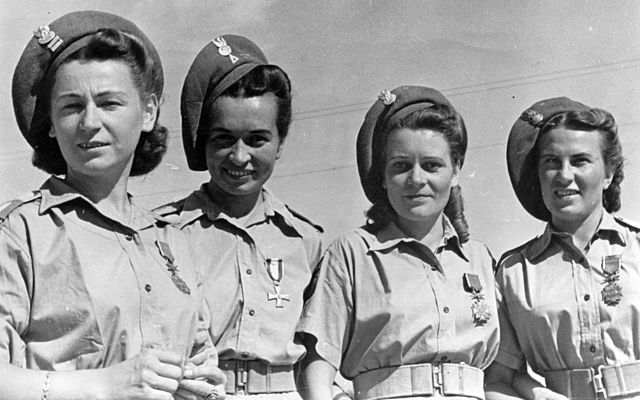
Amidst the chaos of World War II, you might be surprised to learn that women found themselves not just behind the scenes but in combat zones. They played essential roles that went beyond traditional expectations. As nurses, they were right there, tending to the wounded soldiers amidst gunfire and bombs. Their presence and skills were indispensable on the front lines, providing care under incredibly challenging conditions.
Women pilots, known as the Women Airforce Service Pilots (WASP) in the United States, ferried aircraft from factories to military bases, sometimes flying into active war zones. Their combat experiences were fraught with danger, proving that they could handle these high-stakes missions just as well as their male counterparts. These women’s contributions were fundamental to maintaining the supply of aircraft needed for combat operations.
In the Soviet Union, women served as snipers and combat pilots, directly engaging in warfare. Their bravery and precision left a significant mark on military history. Despite the risks, these women showcased remarkable resilience and strength, challenging the norms of their time. Through their combat experiences, they redefined the boundaries of women’s contributions in military service, proving their capability and courage in unprecedented ways.
Post-War Impact on Gender Roles
The remarkable bravery and skill women displayed in combat zones during World War II laid the groundwork for significant shifts in gender roles after the war. As you returned to civilian life, post-war employment opportunities began to expand for women, challenging the traditional societal expectations that confined you to domestic roles. You’d proven your capabilities in high-pressure environments, and many believed you could contribute just as effectively in the workforce.
However, the change wasn’t entirely smooth. Societal expectations still lingered, urging you to return to homemaking. Despite this, the war had undeniably planted seeds of change. Industries that had employed women out of necessity during the war saw the value in maintaining a diverse workforce. You found yourself steering through new roles in sectors like manufacturing, administration, and even budding fields like technology.
This period marked the start of a gradual but profound transformation in gender roles. You weren’t just filling gaps anymore; you were part of a movement that questioned and redefined what it meant to be a woman in society. Your wartime contributions had permanently altered the landscape, setting the stage for future generations to push for even greater equality.