

The Battle of Monte Cassino was a significant moment during WWII when the Allies engaged in intense combat to break through Germany’s fortified Gustav Line in Italy. Strategically positioned in high terrain, Monte Cassino provided essential oversight, making it a fiercely contested site. Despite heavy Allied casualties, the Polish II Corps captured the monastery on May 18, 1944. This victory marked a vital turning point towards Rome. There’s much more to investigate about this historic battle.
Background and Strategic Importance
Because the Gustav Line posed a significant barrier to the Allied advance in Italy, the Battle of Monte Cassino became a crucial focal point. A formidable challenge was faced as the Gustav Line’s complex defenses, complete with barbed wire and anti-tank ditches, held back Allied forces.
The strategic importance of Monte Cassino was undeniable, as its high ground provided German defenders a critical observation post over the Liri and Rapido valleys. The Italian campaign hinged on breaking through these defenses, and despite heavy casualties, the battle was fought fiercely over four phases. The Polish II Corps eventually succeeded in the capture of Monte Cassino on May 18, 1944, marking a turning point and enabling progress towards Rome.
The Initial Allied Assaults
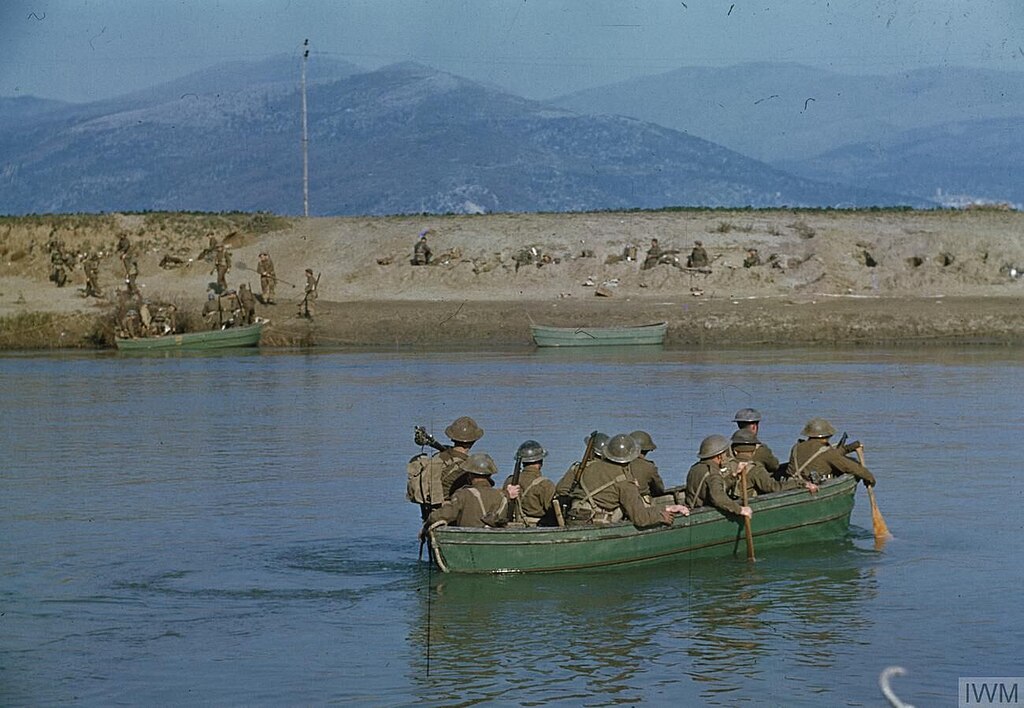
The formidable challenge of the Gustav Line set the stage for the primary Allied assaults at Monte Cassino, which began on January 17, 1944. As part of this effort, the U.S. II Corps aimed to penetrate the well-fortified German defensive positions. These primary assaults quickly proved costly, with the Allies suffering heavy casualties due to fierce German resistance and relentless counterattacks.
The initial battle extended until February 11, 1944, leaving the Allies reeling from significant losses. A second assault, occurring from February 15 to 18, included the controversial bombing of the Monte Cassino monastery. However, this action failed to break the deadlock as Allied forces encountered staunch German resistance. Despite repeated efforts, the Allies struggled to advance beyond the Gustav Line.
Geography and Defensive Positions
Lodged amid the rugged landscape, Monte Cassino’s strategic position dominated the Liri and Rapido valleys, making it essential for control of Highway 6, the primary route to Rome.
The Gustav Line, fortified by German forces, capitalized on this challenging terrain. With high ground advantage, they established complex defensive positions with barbed wire, anti-tank ditches, and pillboxes. The surrounding hills gave German artillery a commanding view, allowing precise fire on any Allied advance and disrupting supply lines.
This challenging terrain, combined with the flooded Pontine Marshes, severely limited Allied maneuverability. As the Allies tried to breach these defenses, they faced relentless artillery fire, leading to heavy casualties.
Breaking through the Gustav Line demanded immense strategy and sacrifice.
The Controversial Bombing of Monte Cassino Abbey
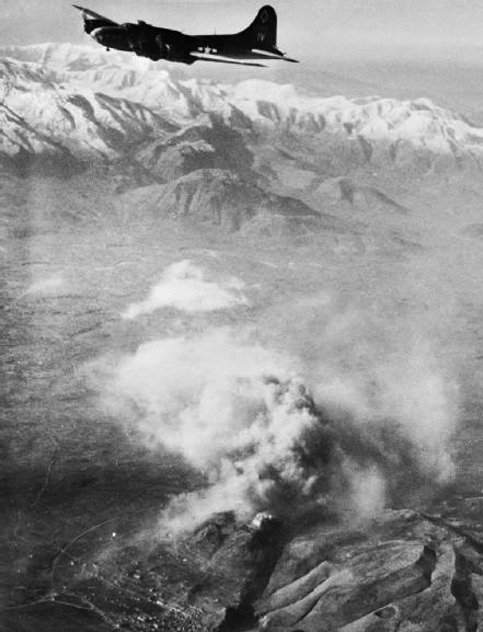
Amidst the chaos of World War II, the bombing of Monte Cassino Abbey on February 15, 1944, became a focal point of controversy. You might question why Allied commanders ordered such destruction of a cultural site. They believed German forces used the abbey for observation, yet the bombing didn’t achieve its military objectives. Instead, German troops entrenched themselves in the ruins, leading to heavy casualties for the Allies. Ethical concerns arose:
- 230 Italian civilians perished, highlighting the tragic consequences of war.
- The bombing underscored the dilemma of targeting cultural sites in warfare.
- It failed to weaken German defenses, complicating Allied ground operations.
- Post-war discussions questioned the balance between military tactics and preserving heritage.
These events left a lasting impact on military strategy and ethics. The strategic bombing campaigns of WWII often blurred the line between military targets and civilian devastation, raising profound ethical questions about the morality of targeting civilians.
The Role of the Polish II Corps
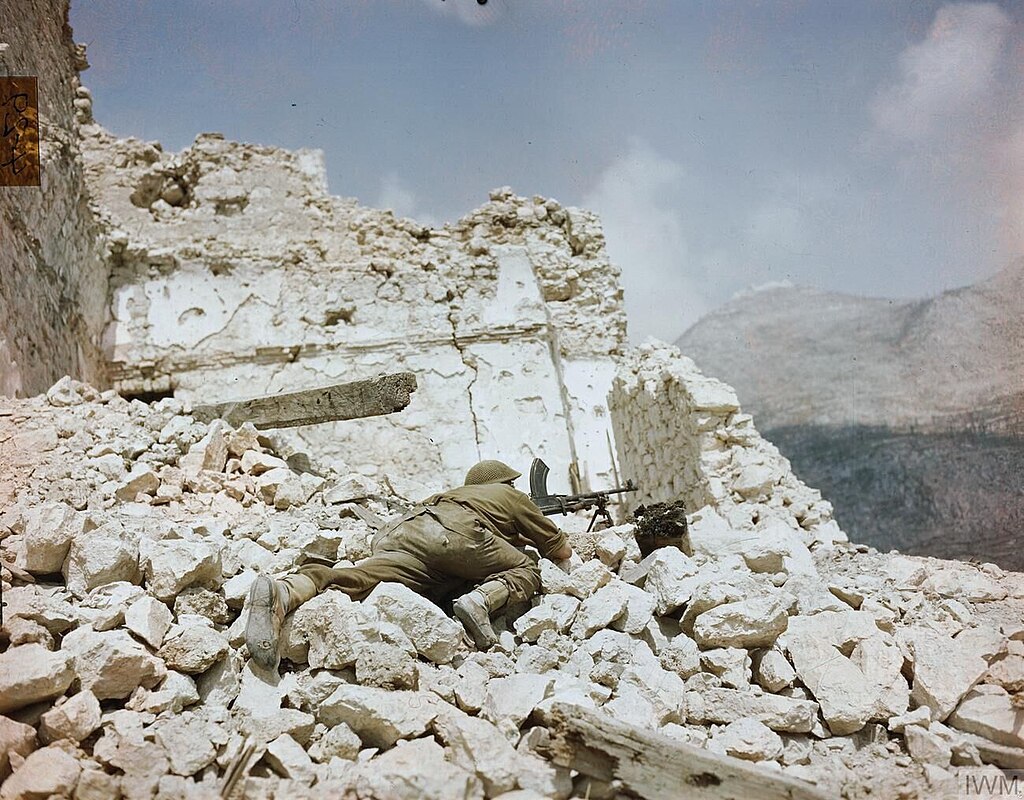
As you investigate the significant moments of the Battle of Monte Cassino, you’ll find the Polish II Corps played a crucial role in the Allied efforts.
Led by General Władysław Anders, these Polish troops, formed from prisoners of war and escapees, aimed to break the Gustav Line and liberate their homeland. Their resilience and careful planning were evident in their fourth assault starting May 11, 1944.
They targeted key communication points of the German forces in Italy, eventually capturing Monte Cassino on May 18. Raising the Polish flag there symbolized their determination but came at a high price, with over 900 soldiers lost.
Their victory marked a turning point, propelling the Allied advance toward Rome.
The Final Assault and Breakthrough
When the final assault on Monte Cassino kicked off on May 11, 1944, the determination of the Polish II Corps took center stage. This carefully planned operation targeted key communication points, isolating German defensive positions.
The Polish forces pushed forward, resulting in significant gains despite heavy casualties. On May 18, the Polish troops triumphantly captured Monte Cassino, raising the Polish flag over the ruins—a powerful symbol of resilience.
This victory was vital for the Allied invasion, facilitating the advance towards Rome and leading to a breakthrough in the German lines.
- Polish II Corps’ perseverance against odds.
- Symbolic raising of the Polish flag.
- Key role in Allied breakthrough.
- Heavy casualties reflecting intense combat.
The Aftermath and Strategic Gains
Capturing Monte Cassino on May 18, 1944, marked an essential moment in the Allied campaign, opening the path towards Rome and beyond.
Breaking through the Gustav Line, Allied forces achieved a significant strategic gain, setting the stage for the liberation of Rome. The collapse of the German Senger Line on May 25 further cemented their foothold in Italy, propelling the Italian Campaign forward.
Despite the victory, the battle resulted in heavy casualties on both sides, highlighting the brutal nature of the conflict. The destruction of the Monte Cassino abbey sparked debates on cultural preservation, emphasizing the need to protect historic sites during war.
Ultimately, this success disrupted German troop deployments and reshaped the European theater of WWII.
Casualties and Human Cost
Despite the strategic gains from the Battle of Monte Cassino, the human cost was staggering.
You’d witness approximately 105,000 Allied casualties and 80,000 German losses. The fighting was brutal, with intense German counterattacks taking a severe toll, especially on the U.S. 36th Division, which suffered 2,100 casualties in just 48 hours.
Polish troops also paid dearly, with over 900 deaths as they valiantly fought to capture Monte Cassino. The destruction of the abbey and the relentless fighting prompted reflection on the ethical implications of strategy and the human cost involved.
- Allied casualties: 105,000 lives impacted
- German losses: Reflecting fierce resistance
- U.S. 36th Division: 2,100 casualties in 48 hours
- Polish fatalities: Over 900, marking their crucial role
The Legacy of Monte Cassino
The legacy of Monte Cassino embodies both triumph and controversy, marking a significant moment in World War II history.
You’ll find that the Battle of Monte Cassino is remembered not only for its intense military tactics but also for the ethical dilemmas surrounding the destruction of cultural heritage. The bombing of the historic Monte Cassino abbey raised questions about wartime strategies.
Yet, the eventual success of the Polish forces was a reflection of resilience and played an essential role in the Allied advance towards Rome. The battle underscored the need for improved coordination between air and ground forces.
In response, UNESCO developed protocols to protect historic sites, reflecting the battle’s lasting impact on military ethics and the preservation of cultural heritage.
Lessons Learned and Historical Reflections
As you reflect on the Battle of Monte Cassino, it becomes evident that the conflict was a crucible for learning critical military lessons.
The vast Allied casualties revealed the staggering cost of breaching entrenched defenses. Coordination between air and ground forces proved vital, as the bombing of the abbey only aided German reinforcements.
The Polish II Corps’ success highlighted morale’s power in military strategy. The destruction of the Monte Cassino abbey sparked debates on preserving cultural heritage during warfare.
These insights shaped future operations and strategies.
- High human cost: 105,000 Allied and 80,000 German casualties.
- Effective coordination: Important between air and ground forces.
- Morale’s significance: Exemplified by the Polish II Corps.
- Cultural heritage: Raises ethical discussions on military actions.