

At the 1943 Battle of Kasserine Pass, you see directly how the U.S. forces faced a significant challenge in North Africa. The inexperience and poor planning led to a tactical defeat with 300 Americans killed and 3,000 wounded. Command issues, like Major General Fredendall’s remote decision-making, were evident, exposing the need for better coordination. Post-battle, the U.S. revamped strategies and command to become stronger. There’s a fascinating odyssey ahead to investigate these changes.
Strategic Background and Operation Torch
Although the Western Allies convened at the Arcadia Conference with a “Germany Priority” strategy in mind, they realized the significance of establishing a foothold in North Africa initially.
Operation Torch marked the onset of this strategy, with the Allied invasion of French North Africa on November 8, 1942. You’d see over 80,000 American forces and 20,000 British troops land at key ports like Casablanca, Oran, and Algiers, encountering minimal resistance.
The Royal Air Force, utilizing its strategic bombing expertise, played a crucial role in supporting ground operations during this campaign. This strategic background set the stage for future confrontations, including the Battle of Kasserine Pass. The U.S. II Corps positioned at Tebessa aimed to protect Kasserine Pass from the German army.
Securing these regions was vital, as it allowed the Allies to solidify their presence and prepare for further advances.
Initial Engagements and German Offensive
As the German offensive at the Battle of Kasserine Pass kicked off on February 14, 1943, their forces swiftly targeted the U.S. II Corps.
You witness the initial engagements leading to significant setbacks for U.S. forces, struggling to maintain coordination. The Germans exploited weaknesses in American defenses, forcing a retreat of up to 50 miles.
Rommel’s troops, advancing through Kasserine Pass, captured strategic positions and inflicted heavy casualties, highlighting the inexperience of U.S. forces.
Command Structure and Tactical Decisions
The chaos of the initial engagements at Kasserine Pass exposed glaring flaws in the U.S. command structure and tactical decisions. Major General Lloyd Fredendall’s reliance on maps, rather than personal reconnaissance, led to poor situational awareness, contributing to American setbacks.
His headquarters sat 70 miles behind the frontline operations, delaying communication and coordination with U.S. II Corps.
General Dwight D. Eisenhower recognized the need for effective leadership and restructured the command to overcome these issues. This included appointing Major General George S. Patton to lead, ensuring more aggressive and efficient tactical decisions.
Key takeaways include:
- Proximity: Command should be close to the action.
- Coordination: Effective integration with Allied forces is essential.
- Leadership: Experienced leaders improve operational success.
The Battle at Kasserine Pass
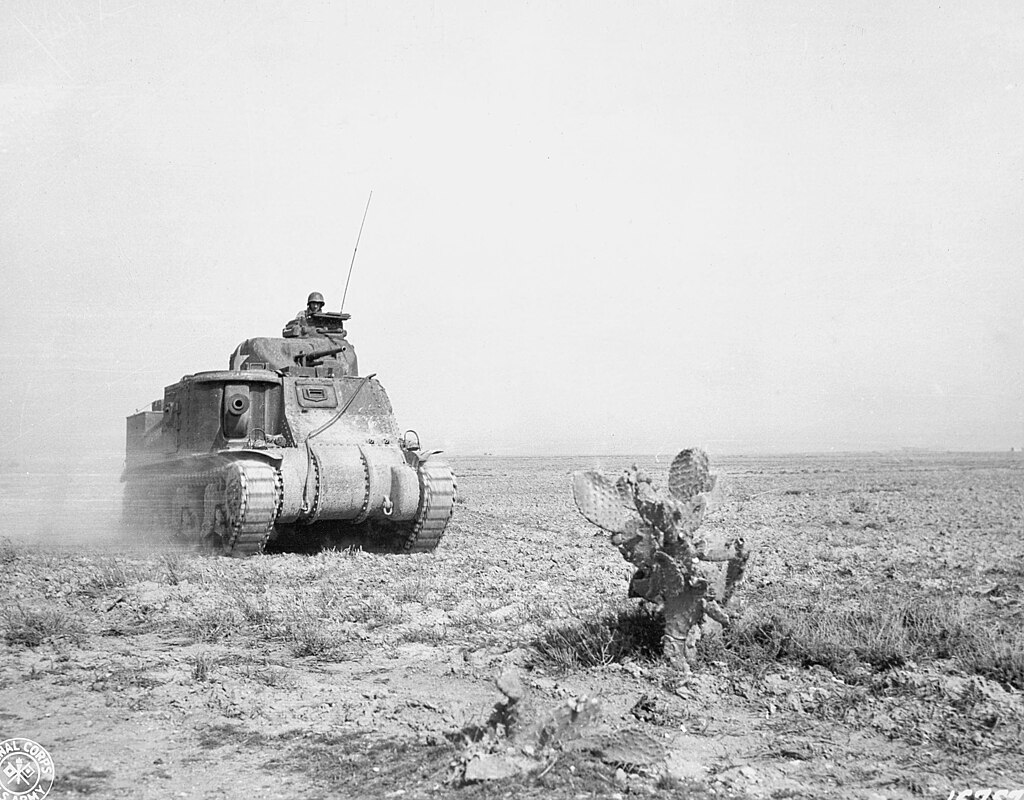
When the battle raged at Kasserine Pass from February 19 to 24, 1943, U.S. forces faced their initial major confrontation with the German Army in North Africa.
Led by General Erwin Rommel, German forces executed a coordinated attack, exploiting tactical failures and weak command coordination under Major General Lloyd Fredendall’s leadership.
The U.S. troops, inexperienced and poorly communicated, were forced to retreat up to 50 miles, suffering American losses of around 300 killed and 3,000 wounded.
Although the battle was a tactical defeat, it provided invaluable lessons for U.S. forces.
Recognizing the need for improved command coordination, air superiority, and better-integrated support, these lessons paved the way for significant reforms and strategic adjustments in subsequent North African campaigns.
Defense Forces and Outcomes
Although the Battle of Kasserine Pass highlighted serious challenges for the Allies, the defense forces, comprised of the U.S. 1st Battalion, 26th Regimental Combat Team, and French General Welvert’s Task Force, faced an uphill battle against the seasoned German Afrika Korps led by General Erwin Rommel.
The initial assault on February 20, 1943, led to a retreat of U.S. troops by up to 50 miles, revealing command failures and a lack of coordination and training.
Despite American casualties of 300 killed and 3,000 wounded, the tide turned with effective air attacks aiding in the German withdrawal by February 23.
Technological advancements, such as radar systems, played a critical role in enhancing the Allies’ defensive capabilities and contributed to their eventual success in North Africa.
Here’s what stands out:
- American casualties: High toll on lives and equipment.
- Command failures: Prompted leadership changes.
- Air attacks: Key to regaining ground.
Lessons Learned From the Battle

Image: Federal Archives, Image 146-1990-071-31 / CC-BY-SA 3.0, Federal Archives Image 146-1990-071-31, North Africa, Rommel, Bayerlein, CC BY-SA 3.0 DE
As the dust settled on the Battle of Kasserine Pass, it became clear that the U.S. military faced significant challenges that demanded immediate attention. Major General Lloyd Fredendall’s leadership shortcomings led to his replacement by Major General George Patton, who revitalized U.S. forces with stronger command.
The battle exposed the essential need for better coordination and communication across ground, air, and artillery units, which initially struggled. Effective reconnaissance was lacking, as Fredendall’s distant headquarters hampered situational awareness and timely decisions.
U.S. troops realized the importance of rigorous training and preparation, having been caught off-guard by the Germans’ tactical prowess. These lessons transformed tactical performance and strategies, playing a vital role in the success of the North African campaign.
Historical Impact and Subsequent Developments
The Battle of Kasserine Pass might’ve been a tactical defeat, but it was a turning point that sparked crucial reforms within the U.S. The operational setbacks and American casualties exposed weaknesses in U.S. forces, leading to Major General Lloyd Fredendall’s replacement.
General Dwight D. Eisenhower took command, focusing on critical changes to improve effectiveness.
Here are three key developments:
- Leadership Changes: Fredendall’s removal allowed Eisenhower to implement cohesive strategies with Allied forces.
- Tactical Improvements: Emphasizing air superiority and artillery coordination became priorities, addressing past failures.
- Training Enhancements: U.S. troops received better tactical training, preparing them for future engagements.
These reforms transformed the U.S. Army, enabling stronger performances in later battles against German forces.