

In 1937, the Battle of Shanghai marked a violent beginning to full-scale war in China, with Japanese forces launching aggressive military campaigns against a disadvantaged yet resilient Chinese army. Shanghai’s strategic location made it a target for Japanese expansion. The brutal conflict devastated the city’s civilians, drawing international attention and condemnation. The battle exemplified the harsh realities of urban warfare and set the stage for increased foreign involvement and support for China’s resistance efforts. Uncover more about these events.
Historical Context of the 1930s
While the 1930s might seem like just another time frame, it was actually a time of escalating tensions that set the stage for World War II.
One of the most significant events was Japanese Aggression in Asia, which included a full-scale invasion of China during the Second Sino-Japanese War. This period saw the Battle of Shanghai, a brutal confrontation that highlighted the struggles of Chinese soldiers.
Despite their large numbers, these soldiers faced significant disadvantages due to inadequate training and equipment. The Battle of Shanghai, lasting from July to November 1937, became a symbol of the time frame’s violent clashes. It demonstrated the harsh realities of urban warfare and foreshadowed the widespread devastation that would follow in the global conflict.
Prelude to Conflict: Rising Tensions
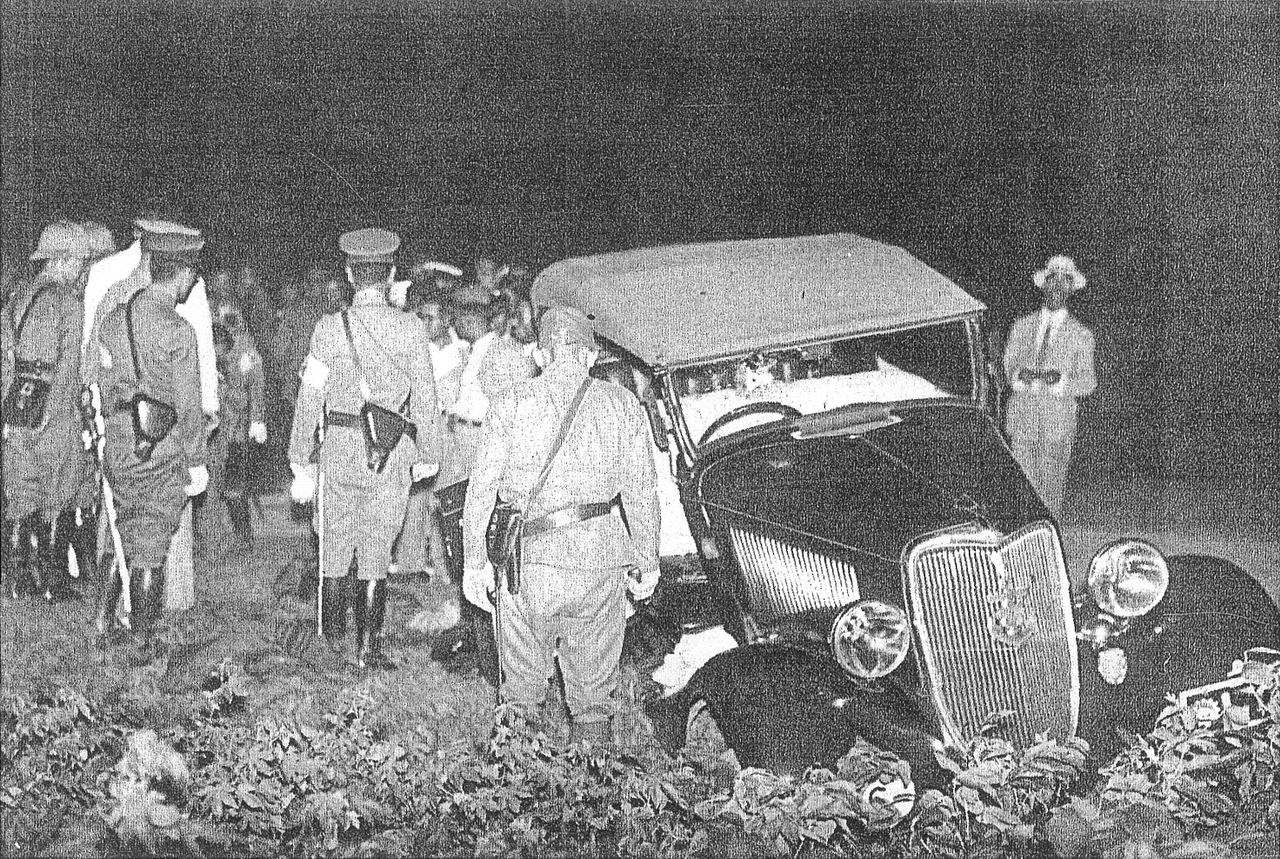
As tensions rose between China and Japan during the 1930s, the seeds of conflict were sown with Japan’s occupation of Manchuria in 1931. This Japanese invasion revealed expansionist ambitions and fueled anti-Japanese sentiment across China.
In Shanghai, protests against Japanese imperialism erupted, leading to boycotts of Japanese goods and economic consequences for their businesses. The Chinese Nationalist government, led by Chiang Kai-shek, faced challenges in uniting different factions to mount a cohesive defense. This lack of coordination hampered their military response.
The situation intensified after the Marco Polo Bridge incident in July 1937, which marked a significant escalation. By August 1937, escalating provocations in Shanghai prompted the Chinese to mobilize, setting the stage for full-scale war.
The Strategic Importance of Shanghai
With tensions already at a boiling point, Shanghai’s significance couldn’t be overstated.
As a vibrant commercial hub with 3.5 million people, Shanghai was the jewel in the crown of the Treaty Ports established post-Opium War. Its strategic position along the Huangpu River made it indispensable for trade and military logistics.
The Japanese military eyed Shanghai not only for its resources but as a crucial gateway during the Second Sino-Japanese War. They aimed to integrate China into the Greater East Asia Co-Prosperity Sphere. Control of the city meant asserting dominance and expanding influence.
The International Settlement and French Concession, housing about 60,000 foreigners, added to the tensions as both Chinese and Japanese forces vied for control.
Japanese Military Tactics and Objectives
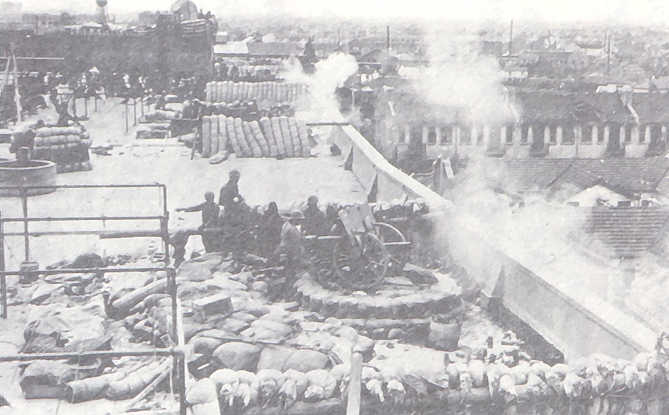
Driven by a strategy focused on rapid offensives, the Japanese military released a coordinated assault on Shanghai, aiming to swiftly overwhelm Chinese defenses.
You’d witness how Japanese military tactics seamlessly integrated naval bombardments and aerial attacks to establish dominance. The Imperial Japanese Navy, positioned along the Yangtze River, utilized naval bombardments to devastate infrastructure and weaken Chinese positions.
Meanwhile, the Japanese air force, leveraging superior training, conducted relentless aerial attacks on military and civilian targets, causing widespread destruction and casualties.
This multifaceted approach was designed not just to capture Shanghai, but also to showcase Japan’s military prowess and reinforce its territorial aspirations in East Asia. The well-orchestrated assaults highlighted the Japanese focus on discipline, mobility, and advanced technology.
Chinese Resistance and Military Coordination
While the Japanese military executed their well-coordinated assault on Shanghai, Chinese forces braced themselves for an intense struggle. The National Revolutionary Army, despite sending well-trained divisions, faced challenges in military coordination.
Here’s what you should know:
- Nineteenth Route Army’s Role: Around 31,000 troops offered early resistance against Japanese forces, albeit with limited equipment and morale.
- Coordination Challenges: Disunity and ineffective strategic command hindered coordinated attacks, making it tough against organized Japanese strategies.
- Fierce Resistance: Chinese forces launched fierce but often disjointed assaults, demonstrating determination but struggling with planning.
- Need for Guidance: The necessity for foreign military advisors became clear as a way to improve coordination.
- Operational Struggles: Despite efforts, Chinese forces found it difficult to match Japanese combat expertise.
Aerial and Naval Warfare in Shanghai
As the Battle of Shanghai raged on, Japan’s superior air and naval forces played a decisive role in shaping the conflict’s outcome.
The Japanese air force, with its advanced technology and tactics, dominated aerial warfare, targeting both Chinese military positions and dense civilian areas. This led to high civilian casualties and widespread destruction.
On the water, Japanese naval forces, equipped with heavy artillery and warships, bombarded Chinese defenses from the Yangtze River, further crippling resistance efforts.
The urban setting of Shanghai magnified the devastation, as aerial and naval bombardments wreaked havoc on infrastructure and residents alike. The Japanese strategy of combining air and sea power foreshadowed future military tactics, proving devastatingly effective in urban warfare scenarios.
The Role of Foreign Powers and Advisors
Amid the chaos of aerial and naval bombardments, the Battle of Shanghai also saw the complex involvement of foreign powers shaping the conflict on the ground.
You’d notice how Germany and the Soviet Union became crucial players. Their military advisors helped modernize the Chinese Nationalist Army’s tactics and structure.
- German advisors, led by General Hans von Seeckt, restructured the military and provided essential equipment.
- The Sino-Soviet Non-Aggression Pact in 1937 enabled the Soviet Union to offer military supplies and form the Chinese Air Force.
- Despite this, the Chinese military faced coordination issues during urban combat.
- Foreign powers highlighted the war’s international dimensions, vying for influence.
- Efforts to reform the Chinese military met challenges amidst chaotic warfare.
These maneuvers underscored global stakes in East Asia.
The Luftwaffe’s early successes in Europe influenced Japanese air strategies, emphasizing the importance of air superiority in modern warfare.
The Human Cost: Civilian Impact and Casualties
The Battle of Shanghai in 1937 inflicted a devastating toll on civilians, with over 300,000 non-combatants killed or injured amid relentless bombardments and fierce urban combat.
Japanese forces’ heavy artillery and aerial attacks turned the city into a nightmare, creating a severe humanitarian crisis. You would’ve witnessed widespread destruction as homes, hospitals, and schools crumbled, forcing more than 600,000 refugees to seek refuge in the International Settlement.
The indiscriminate attacks didn’t just cause physical harm; they also left deep psychological scars, as the horror of mass executions and constant fear became part of daily life.
These staggering civilian casualties emphasized the brutal nature of warfare, showing the tragic consequences of military aggression in Shanghai during this tumultuous period.
Propaganda and Public Perception
While the Battle of Shanghai raged on, propaganda became a powerful tool in shaping public perception on both sides.
You saw Japanese propaganda portraying their invasion as a response to Chinese aggression. They framed Japan as a liberator, promising prosperity through the Greater East Asia Co-Prosperity Sphere.
Meanwhile, in China, anti-Japanese sentiment surged. Propaganda campaigns highlighted atrocities and civilian casualties, rallying support for the Nationalist government. Chiang Kai-shek’s administration emphasized national unity, painting the conflict as a fight against foreign aggression.
International media also played a role:
- Broadcasts detailed the brutality of civilian bombings.
- Reports swayed global opinion against Japan.
- Stories amplified the plight of Chinese civilians.
- Coverage exposed Japan’s military actions.
- Narratives bolstered support for Chinese resistance.
Long-term Implications and Lessons Learned
As you reflect on the impact of propaganda during the Battle of Shanghai, it’s clear that the conflict’s aftermath offered enduring lessons and changed the course of history.
This battle highlighted Japanese brutal tactics, revealing the devastating effects of urban warfare and civilian casualties. Despite facing a technologically superior enemy, fierce Chinese resistance galvanized nationalistic sentiment and unity, setting the stage for a sustained struggle against Japanese aggression.
International condemnation of Japan’s actions increased awareness of the humanitarian crisis, influencing foreign aid and policy during World War II.
The battle demonstrated the Chinese Nationalist government’s ability to mobilize and coordinate diverse forces, including elite troops trained by foreign advisors. These efforts shaped future resistance strategies and left a lasting impact on post-war East Asian relations.
The USAAF’s strategic bombing campaigns during World War II further underscored the importance of air power, illustrating how targeted aerial operations could significantly weaken an enemy’s military and industrial capabilities.