

During WWII, the Battle of Midway was a crucial turning point in the Pacific. You spot how American naval intelligence cracked Japan’s JN25 code, allowing the U.S. to anticipate and counter Japanese strategies. This code-breaking triumph led to a decisive victory, with the U.S. sinking four Japanese carriers. The battle greatly weakened Japan’s naval power and enhanced American morale. Keep going, and you’ll uncover more about this essential moment in history.
Prelude to the Battle: Japanese Expansion and American Strategy
In the wake of Japanese expansion across the Pacific, capturing territories like the Philippines and Singapore, Admiral Chester W. Nimitz crafted an American strategy focused on Midway. This location became a crucial objective to counter Japanese forces. U.S. Navy cryptanalysts demonstrated superior intelligence capabilities by intercepting communications, confirming Midway as the target.
This insight allowed American forces to prepare effectively. The Army Air Forces played a critical role in this preparation, showcasing the strength and flexibility of American air power in the Pacific theater.
Intelligence Breakthrough: Decoding Japanese Communications
In early 1942, U.S. Navy cryptanalysts achieved a breakthrough by cracking the Japanese JN25 naval code, providing essential intelligence on Japanese communications. This allowed them to intercept deceptive messages about water shortages, which revealed “AF” as Midway, the target of Japan’s impending attack. With this knowledge, you could understand the scale and timing of Japan’s plans, giving American forces a significant edge.
Admiral Chester W. Nimitz used this intelligence to strategically position the U.S. fleet for a decisive counterattack. By leveraging these insights, American forces were prepared for what became a critical moment in naval warfare. The effective code-breaking led to the decisive defeat of the Japanese fleet, marking a turning point in the Pacific theater.
Additionally, advancements in WWII plane engine technology, such as supercharging and turbocharging, provided the U.S. forces with faster and more powerful aircraft, further enhancing their strategic advantage.
Strategic Positioning: The American Battle Plan
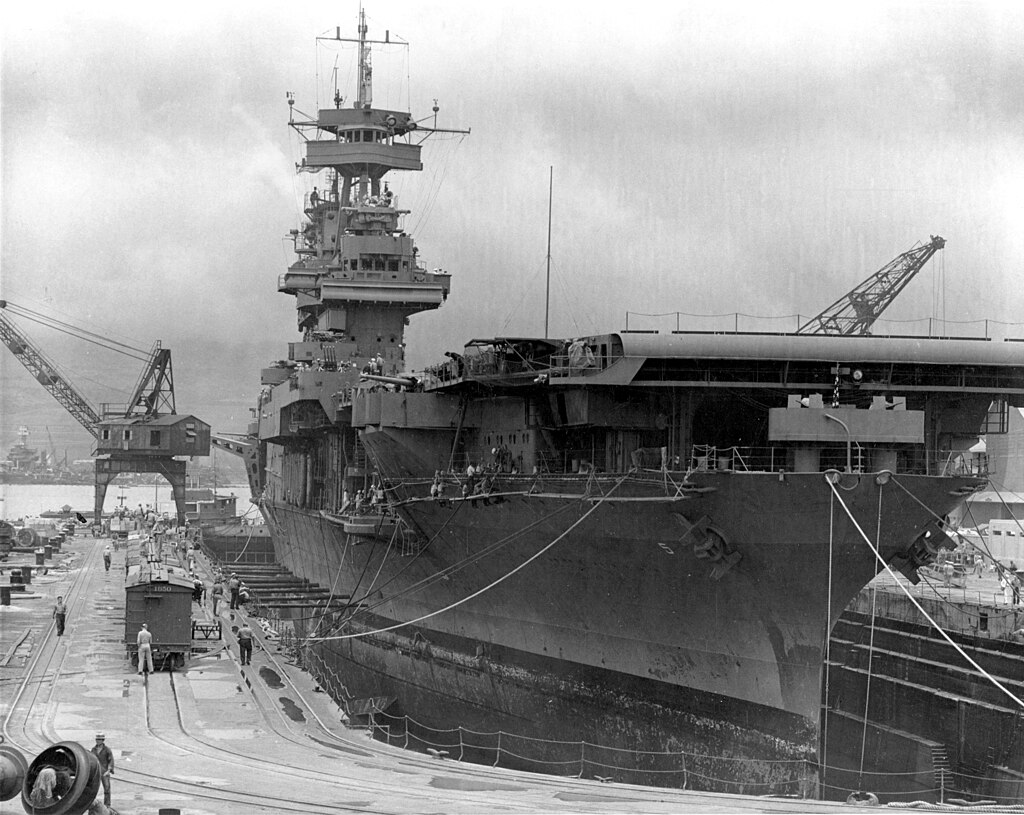
Admiral Chester W. Nimitz crafted a bold battle plan, leveraging the U.S. Navy’s intelligence breakthroughs. Thanks to cryptanalysts, who deciphered Japanese communications, you knew “AF” was Midway, revealing essential details of the Japanese fleet’s intentions.
The strategic positioning of American forces at “Point Luck” was significant. It allowed for surprise attacks on the Japanese fleet. Three aircraft carriers—USS Hornet, USS Enterprise, and USS Yorktown—we’re ready for action. Alongside these were eight cruisers and 15 destroyers, all primed for battle.
Timely reconnaissance and intelligence reports enabled them to coordinate effective strikes with dive-bombers, torpedo bombers, and fighters. This strategic orchestration effectively countered Japanese air superiority, showcasing the strength and foresight of Nimitz’s plan.
The Commencement of Battle: June 3-4, 1942
As dawn broke on June 3, 1942, U.S. reconnaissance planes spotted the formidable Japanese fleet, setting the stage for what would become a decisive confrontation in the Pacific. The Battle of Midway began, marking a critical turning point in the Pacific War.
On June 4, at 5:45 am, a Catalina pilot alerted the United States forces of an impending air attack. The Japanese carriers launched a fierce bombardment at 6:30 am, damaging Midway but sparing the airstrips.
By 7:00 am, U.S. Army Air Forces bravely initiated a torpedo attack, suffering heavy losses without severely damaging the enemy. The tide would begin to shift when Marine Corps bomber planes struck the Japanese carriers Kaga and Akagi, setting the stage for a crucial victory.
Turning the Tide: The Sinking of Japanese Carriers
Although the morning of June 4, 1942, saw initial setbacks for U.S. forces, the tide of the Battle of Midway dramatically turned with the sinking of four Japanese carriers.
The U.S. Navy bomber aircraft, primarily from the USS Enterprise and USS Yorktown, launched a decisive attack at 10:22 AM, catching the Imperial Japanese Navy by surprise. As their carriers Akagi, Kaga, Soryu, and Hiryu were rearming planes, the American bomber aircraft struck, leading to a catastrophic loss.
This sinking marked a crucial turning point in the Pacific Theater, as Japan lost approximately 75% of its carrier strength. The loss of experienced pilots and aircraft severely crippled Japan’s naval aviation, halting their Pacific expansion and shifting the balance of power to U.S. forces.
Continued Strikes: American Pursuit From June 5-7
With the initial victory setting the stage, U.S. forces pressed their advantage from June 5 to June 7, 1942, in relentless pursuit of the retreating Japanese fleet.
The American pursuit featured continued strikes, utilizing aircraft carriers like Enterprise and Hornet to launch torpedo and bombing aircraft against the weakened enemy.
On June 5, American bombers targeted the Japanese fleet, damaging the battleship Yamato and reducing their naval capabilities. The USS Yorktown, despite prior damage, played a crucial role until it was sunk by Japanese submarines on June 7.
The Impact on Japanese Naval Power
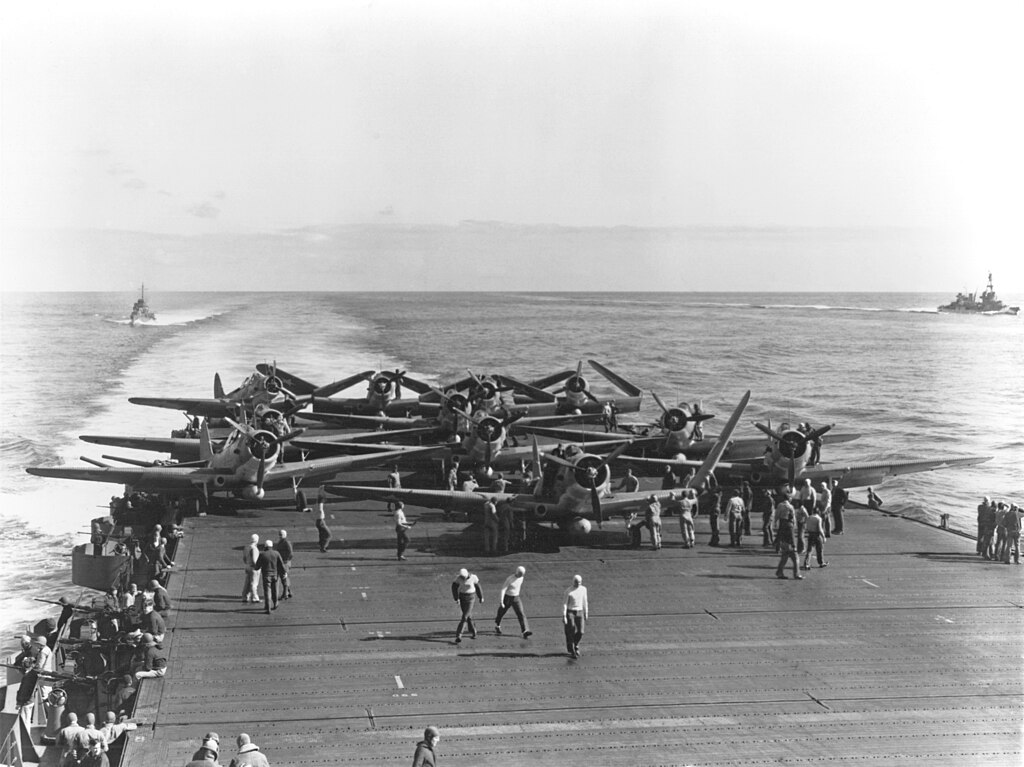
The relentless pursuit from June 5 to June 7 set the stage for a significant shift in naval power in the Pacific.
During the Battle of Midway, Japan’s naval power suffered a significant blow with the loss of four aircraft carriers—Akagi, Kaga, Soryu, and Hiryu. This devastating loss crippled their operational capabilities and reduced carrier strength.
The sinking of these carriers, along with the loss of 3,364 personnel, severely impacted the experienced naval pilots indispensable to Japan’s air operations in the Pacific Theater.
Consequently, Japan’s naval supremacy began to wane, forcing a shift to a defensive posture. Instead of expanding, Japan found itself limited in projecting naval power, marking the beginning of a new phase in the Pacific conflict.
Legacy and Significance of the Battle of Midway
Without a doubt, the Battle of Midway stands as an essential moment in World War II’s Pacific Theater. This significant clash dramatically altered the Pacific War’s trajectory.
The U.S. victory, marked by the sinking of four Japanese aircraft carriers, shifted the strategic balance, crippling Japan’s naval capabilities. Their heavy losses, including experienced pilots, hampered further Japanese offensives.
Important intelligence and code-breaking efforts by U.S. cryptanalysts allowed Admiral Nimitz to outmaneuver Japan, showcasing ingenuity and strategic prowess. This triumph didn’t just change military tides; it also enhanced American morale, symbolizing resilience and determination.
The Battle of Midway remains a reflection of the power of intelligence and strategy, shaping the course of World War II and influencing future naval warfare.