

During World War II, transporting troops efficiently was vital. You’d find railways important for moving vast numbers of soldiers over long distances. At sea, maritime convoys protected by warships guaranteed safe passage across oceans. Motor vehicles, especially trucks and jeeps, provided speed and mobility on land. Aircraft deployment changed logistics, making quick troop movements possible, while paratrooper operations offered surprise attacks behind enemy lines. Amphibious landings, such as those on D-Day, allowed for direct beach assaults. In challenging terrains, pack animals guaranteed supply movement where vehicles weren’t feasible. Uncover how these methods shaped military success during the war.
Rail Transport
During World War II, rail transport played a crucial role in moving troops efficiently across vast distances. When you think about the logistics involved, it’s clear that trains were fundamental for troop mobility. They could carry thousands of soldiers at once, making them a preferred method for moving large numbers of troops quickly. Railways connected multiple strategic locations, enabling forces to be deployed where they were most needed.
You’d notice that the rail network’s efficiency was unparalleled. It allowed for the rapid redeployment of units, guaranteeing that the military could react swiftly to changing circumstances on the battlefield. Train logistics required careful planning and coordination, but they offered the advantage of being less vulnerable to enemy attacks compared to other transport methods.
In your role managing troop movements, you’d appreciate how trains provided a secure and reliable means of transportation. They could operate in different weather conditions and weren’t as susceptible to disruption as roads might be. With the ability to transport troops, equipment, and supplies simultaneously, rail transport was a backbone of military operations. By relying on trains, military leaders guaranteed that their forces remained mobile and responsive throughout the war.
Maritime Convoys
While rail transport efficiently moved troops across land, maritime convoys were vital for traversing oceans and seas during World War II. You couldn’t just send ships across the water without a plan; naval logistics played a significant role in orchestrating these vast movements. Ships had to be organized into convoys to guarantee that troops and fundamental supplies reached their destinations safely. Each convoy required careful planning and coordination, taking into account the number of ships, their routes, and the potential threats they might encounter.
Convoy protection was paramount. Warships and aircraft escorted these convoys to safeguard them from enemy submarines and aircraft. You might’ve heard about the infamous U-boats that German forces used to disrupt Allied supply lines. Without effective convoy protection, these submarines could wreak havoc, sinking troop transports and supply ships alike. To counter this, naval escorts like destroyers and corvettes patrolled the waters, using sonar and depth charges to deter or destroy enemy submarines.
Motor Vehicles
In World War II, motor vehicles transformed troop transport on land, offering speed and flexibility that traditional methods couldn’t match. You’d find jeeps at the forefront of this change, traversing rough terrains and delivering soldiers swiftly to their destinations. The jeep’s compact size and agility made it indispensable for quick maneuvers in combat zones, allowing troops to respond faster than ever before. Unlike horses or foot marches, jeeps provided the ability to cover more ground quickly, enhancing the mobility of infantry units.
Truck convoys played an essential role in moving large numbers of troops and their equipment efficiently. These convoys, consisting of numerous trucks traveling in organized groups, guaranteed that soldiers and supplies reached the front lines when needed. You could see them stretching along roads, carrying everything from rations to reinforcements. The reliability and capacity of these trucks meant that armies could maintain momentum, vital in a war where speed often determined success.
Aircraft Deployment

As motor vehicles transformed land transport, the skies became a new frontier for moving troops rapidly and efficiently. During World War II, aircraft deployment was pivotal in addressing the logistical challenges of moving large numbers of soldiers across vast distances. You’d see how airlift strategies were carefully planned to guarantee troops arrived at their destinations on time and ready for action. By utilizing cargo aircraft, military forces could bypass obstacles that land and sea transport faced, such as difficult terrain or enemy blockades.
Cargo aircraft, like the C-47 Skytrain, played an important role in these operations. They were designed to transport not only troops but also critical supplies and equipment. With robust airlift strategies in place, these planes could swiftly move personnel to strategic locations, sometimes in just a matter of hours. The ability to quickly deploy troops gave Allied forces a significant advantage, allowing them to respond rapidly to evolving battle conditions.
You can appreciate how this method of transport changed the dynamics of military logistics, offering unprecedented speed and flexibility. Aircraft deployment became a game changer, guaranteeing that troops were always positioned where they were most needed during significant moments of the war.
Paratrooper Operations
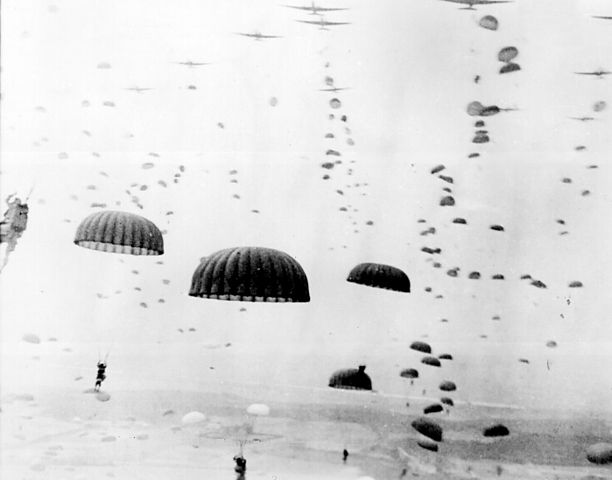
Paratrooper operations during World War II marked a revolutionary approach to warfare, adding a new layer of surprise and tactical advantage. You’d find that these operations relied heavily on airborne tactics to deliver troops precisely where they were needed most. Imagine the scene: hundreds of paratroopers leaping from aircraft, descending silently into enemy territory. This method allowed for rapid deployment, bypassing traditional front lines and catching opponents off guard.
When planning these operations, identifying effective drop zones was essential. You’d need to select locations that provided tactical advantages, such as proximity to strategic targets or natural cover. These zones had to be secured quickly, ensuring that incoming paratroopers could regroup and launch attacks effectively. The precision of airborne tactics meant that even small groups of soldiers could disrupt enemy supply lines, communications, and fortifications.
As a paratrooper, you’d rely on these tactics to execute surprise assaults and create chaos behind enemy lines. The element of surprise was your greatest ally, allowing you to strike swiftly and retreat before the enemy could organize a counterattack. By mastering these techniques, paratrooper operations became a significant component of Allied success during the war.
Amphibious Landings
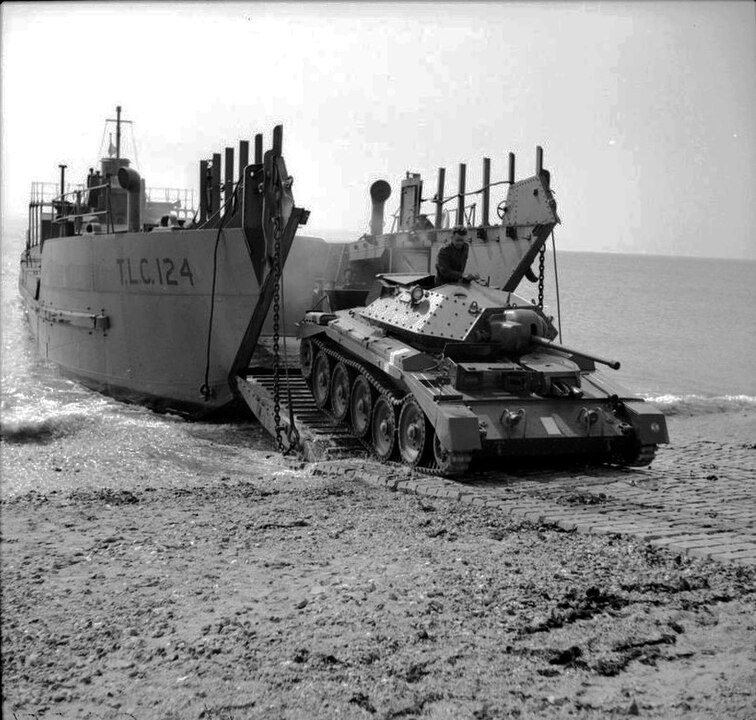
While paratroopers soared through the skies, another method of troop transport brought forces directly from sea to land: amphibious landings. You can picture the scene: ships approach a hostile shore, and soldiers brace themselves for the intense beach assaults that await. The success of these landings depended heavily on naval logistics, ensuring that troops, vehicles, and supplies hit the beaches at precisely the right moment.
In World War II, amphibious operations like D-Day in Normandy became iconic. You watch as landing crafts, known as Higgins boats, approach the beaches under heavy enemy fire. These boats were vital for transporting troops swiftly and safely from ships to shore. As the ramps drop, soldiers rush onto the sandy beaches, facing formidable obstacles. But thanks to careful planning and naval support, they manage to establish a foothold.
Naval logistics were significant in coordinating these complex operations. You’d need to take into account tides, weather, and enemy defenses, all requiring precise timing and execution. Supporting ships provided cover, bombarding enemy positions to protect the landing forces. In these critical moments, the blend of strategy and bravery defined amphibious landings as a key element of World War II troop transport.
Pack Animals and Infantry
In the rugged terrains of World War II battlefields, pack animals played a crucial role in troop transport, particularly in areas inaccessible to vehicles. You might not realize it, but mule logistics were imperative to moving supplies and equipment where trucks simply couldn’t go. Mules, known for their sure-footedness and endurance, were perfect for traversing steep mountains and dense forests. They carried ammunition, food, medical supplies, and even small artillery pieces, ensuring that troops remained well-equipped and ready for action.
As you explore the details, you’ll find that these pack animals were often integrated with infantry units to improve mobility and flexibility. In many cases, cavalry tactics were adapted, not for mounted charges, but for efficiently managing supply lines and ensuring the seamless movement of goods. By using pack animals, military planners could overcome logistical challenges that motorized vehicles couldn’t handle due to rough terrain or lack of infrastructure.
For you, understanding the significance of pack animals in World War II, beyond the romanticized image of the cavalry, highlights how crucial adaptability was in wartime strategies. These animals were unsung heroes, silently bolstering the war effort through their indispensable service.